

























































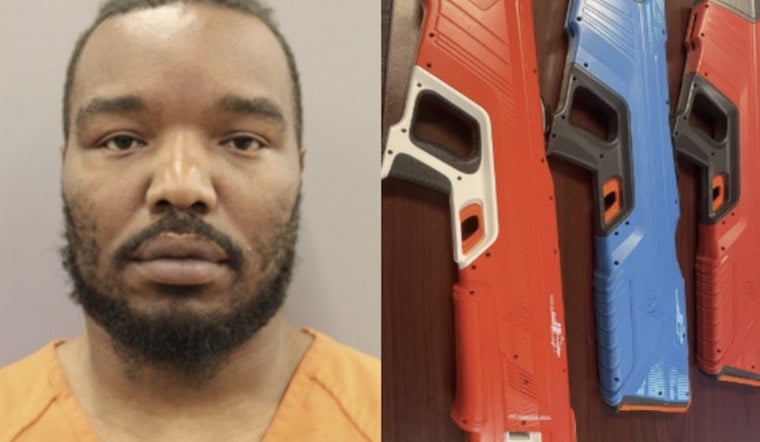
Houston police say a string of cruel water-gun ambushes on the city’s west side left multiple disabled and unhoused residents soaked, hurt, and shaken. The attacker allegedly used a high-powered, motorized water gun, recorded the assaults, and shared at least some of the footage online.
Investigators identified 34-year-old Christopher Cayce as the suspect and charged him with assault causing bodily injury after reviewing videos and witness statements, according to Houston police. Authorities are urging anyone with information to call the HPD non-emergency line at 713-884-3131, or dial 911 in an emergency.
Cayce was booked into the Harris County Jail on two traffic violations while the assault case remains under investigation, as reported by Click2Houston. Investigators say social media clips tied to the incidents helped them narrow down their search.
What Investigators Say
According to a post from Houston Police, HPD’s Major Offenders Division and the Westside Crime Suppression Team dug into multiple reports of disabled and homeless people being hit with a motorized water gun.
Police say the suspect allegedly taunted and recorded victims while firing the device, with detectives later linking posted videos back to him. Authorities described the incidents as deliberate targeting of vulnerable people and stressed that the investigation is still active.
Charges And Next Steps
Cayce is charged with assault causing bodily injury and faces review by Harris County prosecutors, Houston Police stated. The case is expected to move through the county’s criminal courts as investigators continue gathering additional video and witness statements.
Community Concerns And Resources
The reported attacks have stirred fresh concern about how easily people living on the streets or with disabilities can become targets, especially when cameras are rolling and social media attention becomes part of the equation.
Local advocates and outreach workers say harassment like this can deepen mistrust and make it harder for people to seek help from shelters, clinics, or caseworkers. Nonprofits that work in encampments and around shelters typically urge anyone who witnesses crimes against homeless or disabled residents to report them to police or to Crime Stoppers, so there is a record and potential protection for future victims.





