

























































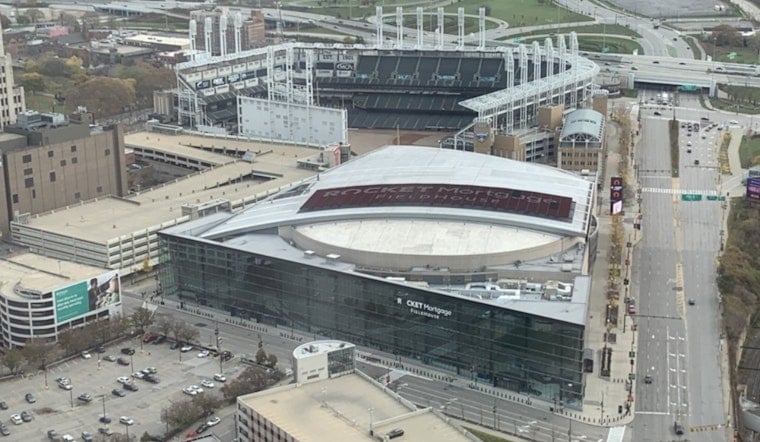
Cuyahoga County leaders are circling a familiar target to fix up Cleveland’s pro sports homes: the sales tax line on every receipt. County Executive Chris Ronayne is drafting legislation to bump the county sales tax by 0.15 percentage points and pour the new money into a special repair fund for Progressive Field and Rocket Mortgage FieldHouse. The Guardians and Cavaliers would share that pot. The Browns, notably, would not. The timing is no accident, as the nonprofit that oversees both facilities is warning its repair accounts are running on fumes.
According to Cleveland.com, Ronayne’s draft ordinance would steer the 0.15% increase into a sports facility reserve fund dedicated to the ballpark and the arena. Each team’s draw would be capped at the lesser of 50% of the fund’s deposits or 75% of Gateway’s current and accumulated lease obligations. Because the measure is being written as an ordinance instead of a nonbinding resolution, council could put the tax change into effect itself if a majority approves the final language.
Gateway officials say the clock is already ticking. "We do not currently have any available funds for capital repairs at the Arena," Gateway Executive Director Todd Greathouse wrote in an email. Signal Cleveland reports that much of the $40 million the city and county set aside last year for work at the facilities is already spoken for. The outlet also notes that Gateway is projecting serious strain on available sin-tax and repair revenues as it heads toward 2027 unless new money shows up fast.
Not everyone on county council wants to raise the tax rate to get there. Councilman Michael Gallagher has put a competing idea on the table that would carve out a portion of existing sales-tax collections for stadium repairs across all three major venues in the county, the Guardians, Cavaliers and Browns, Cleveland.com reports. County communications director Kelly Woodard told the outlet that Gallagher’s approach would slice nearly $25 million a year from the county’s general fund, a hit that has quickly become a flashpoint in council budget talks.
How the proposal would work and the legal limits
Ronayne’s team is crafting the sales-tax change as an ordinance, which means that if council signs off on the text, the increase could take effect without a separate countywide ballot measure. That strategy arrives after earlier attempts to expand sin-tax revenues for stadium work ran into trouble in Columbus, where state leaders blocked a broader tobacco and alcohol tax push this spring. As Ohio speaker benches sin-tax hike detailed, Ohio legislative leadership shelved that effort before it could reach local voters.
Any new sales-tax ordinance also has to live inside the county’s own rules. Local law spells out how Cuyahoga County can levy and allocate sales-and-use tax receipts, and those provisions will frame whatever council can legally do with a stadium-focused reserve. The governing language is laid out in the Cuyahoga County code.
Politics are already running alongside the legal questions. Some council members argue that long-running tax changes should go in front of voters, especially for something as high-profile as pro sports venues. Others counter that residents elected the council to make hard fiscal calls and that delaying repairs in favor of a ballot fight could end up costing even more in the long run. Inside both council chambers and the mayor’s office, officials are weighing immediate repair needs, future debt load and the political fatigue that comes with yet another county tax discussion.
What’s next
Gateway’s board could sign off on a new batch of repair projects as soon as July 15, a move that would pile even more pressure on the already tight repair budget if those projects are approved, according to Signal Cleveland. On the legislative side, council is staring at multiple paths forward, including redirecting existing sales-tax collections, creating a dedicated reserve fund or adopting the proposed 0.15% increase.
Any ordinance that sets up a sports facility reserve would follow the implementation timeline written into the final council action, and would not kick in overnight. That step-by-step rollout, along with the competing plans now in circulation, was outlined in local coverage from Cleveland19.



