

























































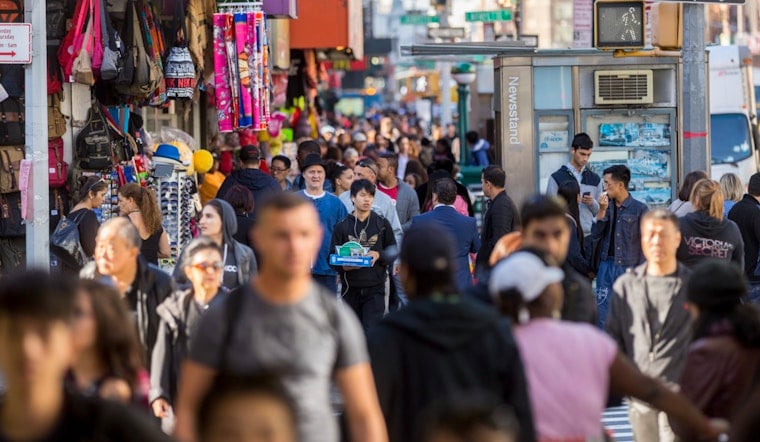
Lower Manhattan is getting a new two‑way protected bike path along Grand Street and parts of Canal Street this year, but the design already has cyclists sounding the alarm. The route, as currently drafted, would squeeze two directions of bike traffic into just eight feet of lane width, or about four feet per direction. Riders and street‑safety advocates say that leaves almost no room for passing, cargo bikes, or the growing wave of e‑bikes. At a recent community board presentation, DOT staff went so far as to call the layout “the smallest we can make it.”
What DOT Is Proposing
As outlined by NYC DOT, the draft redesign covers Canal Street from West Street to the Bowery and would repurpose the existing eastbound protected lane on Grand into a 16‑block, two‑way connection. The upgraded corridor would link to Chrystie Street, Sixth Avenue, Varick Street and Watts Street before feeding riders into the Hudson River Greenway. Officials describe the project as part of a phased overhaul meant to widen pedestrian space, simplify intersections and calm traffic along the notoriously hectic stretch.
How Narrow Is “Narrow”?
At the community board meeting, DOT showed a cross‑section that puts the combined two‑way bike facility at eight feet wide, plus a three‑foot buffer. In the same design, about 23 of Grand’s 34 feet would remain dedicated to car travel. As reported by Streetsblog New York City, critics argue that eight feet is not enough for safe passing or for accommodating the city’s expanding mix of e‑bikes and bulkier cargo bikes. DOT project staff told the board the tight layout reflects tradeoffs intended to preserve curbside space for deliveries.
How The Plan Compares To Design Guidance
The National Association of City Transportation Officials recommends that two‑way protected bike lanes be about 13 feet wide to comfortably allow passing and platooning, and labels eight feet an “absolute minimum” that “should be avoided except on short street segments.” According to NACTO, designers are encouraged to reallocate roadway space from motor vehicles in order to create “increased rideable width” for cyclists.
DOT Says Deliveries Constrain Options
DOT has framed the skinny lane as a necessary compromise driven by heavy truck and delivery activity on Grand. In a statement to Streetsblog New York City, DOT spokesperson Mona Bruno said the agency “looks forward to delivering major safety upgrades on Canal and Grand streets, including a widened, two‑way cycling connection on Grand,” and argued that the eight‑foot path with a three‑foot buffer would serve crosstown bike traffic while still accommodating local freight needs. The presentation also included plans for concrete protection islands on Canal and a bus boarding island on Sixth Avenue.
Local Reaction And Next Steps
Advocates and some residents have pushed DOT to go further, urging the agency to reclaim parking and travel lanes so cyclists and pedestrians are not squeezed to the margins. Community boards have also pressed DOT to move faster on the eastern portion of Canal, where sidewalks see the heaviest crowding. Manhattan Community Board 3 minutes show members backing safety upgrades overall while flagging concerns about emergency access and vendor management on the corridor.
DOT has told the board it will return later this year with more detail on the eastern phase and a clearer implementation timeline. For now, the fight over Grand and Canal is shaping up as a high‑stakes test of how the city balances freight, parking and its ambitious bike‑network goals. Riders and neighborhood leaders say they will be watching closely to see whether the agency widens the planned lanes before paint hits the pavement.





