

























































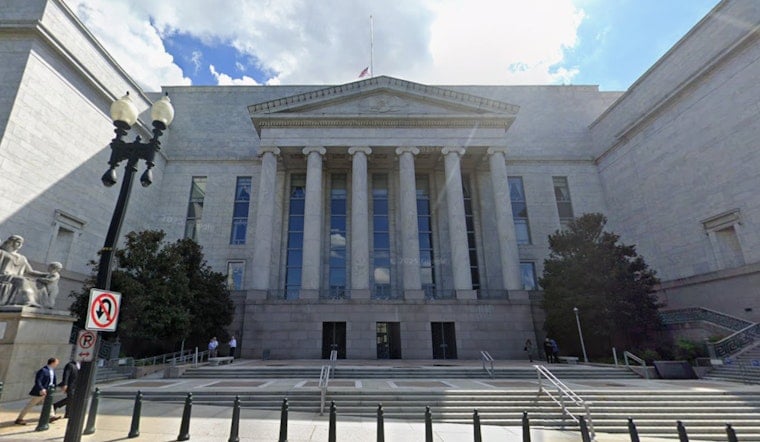
On Tuesday, members of the House Foreign Affairs Committee took turns grilling State and Defense Department officials over what they described as a baffling U.S. strategy in Haiti. On one hand, Washington is backing a United Nations authorized security mission. On the other, it is moving to strip protection from hundreds of thousands of Haitians living legally in the United States. The hearing put security aid, overseas contractors and a fast-approaching legal deadline for Temporary Protected Status on a direct collision course.
Chairman Rep. Brian Mast opened the session with a deep dive on the price tag. He laid out U.S. assistance for Haiti and pressed witnesses on costs and oversight, saying the administration has supplied bridge and sustainment funds, equipment and basic logistics that taxpayers are footing. His prepared remarks highlighted specific line items and demanded clarity on benchmarks for the United Nations authorized Gang Suppression Force, according to the House Foreign Affairs Committee.
Several lawmakers went straight at what they saw as a basic contradiction. “There is an obvious contradiction in declaring Haiti safe enough to receive deportees while warning Americans not to travel there,” Rep. Bill Keating told witnesses, as reported by the Miami Herald.
The administration’s witnesses included Michael Kozak, the State Department official overseeing the region, and Col. Justin Gorkowski, co-lead of the Defense Department’s Haiti Tiger Team. They described gangs controlling large parts of Port-au-Prince and told lawmakers the violence looks more like a proto-insurgency than standard criminal activity. Stabilizing Haiti, they said, will require dismantling arms networks, cutting off illicit revenue streams and addressing safe havens, and they stressed that security measures alone will not fix deeper political and humanitarian crises. Full hearing materials are available on the committee’s site at the House Democrats’ hearing page.
Why Lawmakers Say The Policy Does Not Add Up
The oversight push landed just as the legal ground shifted. On June 25, 2026, the U.S. Supreme Court ruled that the Trump administration’s decision to end Temporary Protected Status, or TPS, for Haiti and Syria is not subject to the kind of judicial review beneficiaries had sought. That decision cleared the way for the termination plan and, lawmakers warned, could leave roughly 350,000 people with TPS newly exposed to removal. The ruling was a central flashpoint at the hearing, according to the Washington Post.
Legal Clock And The Work-Permit Deadline
In practice, the legal and bureaucratic posture has created a tight window. Recent agency guidance and court orders have set short “placeholder” dates for employment authorization. For many Haitian TPS holders, current government guidance keeps work permits valid only through July 24, 2026, a temporary date employers and advocates are using while litigation and policy implementation play out, according to reporting from the CT Mirror. Lawmakers repeatedly circled back to that countdown during the hearing.
Human Rights Questions And Private Contractors
Members also zeroed in on allegations involving U.S.-linked private contractors and lethal drone strikes in Haiti that rights groups say have killed civilians. Human Rights Watch reported that between March 1, 2025 and January 21, 2026, at least 141 drone operations killed at least 1,243 people, including children, and said several strikes appeared to be unlawful. Lawmakers cited that reporting while pressing witnesses for answers. Human Rights Watch is calling for transparency and accountability around those operations.
What Comes Next
One potential path runs through Congress. The House has already advanced legislation aimed at extending protections for Haitian nationals, although any measure faces an uncertain future in the Senate and with the administration. In the meantime, local advocates and elected officials in South Florida and other communities with large Haitian populations are ramping up lobbying and services, and the committee signaled it plans to keep the pressure on the administration until it gets clearer benchmarks and answers. For a fuller account of the questioning and political backdrop, see coverage by the Miami Herald.
Tuesday’s hearing laid bare a hard choice for U.S. policymakers. They must decide how to match short-term security efforts with a lasting political and humanitarian strategy, and whether canceling protections for large numbers of Haitians undercuts the stability Washington says it wants to help build. Lawmakers walked out demanding clearer cost estimates, tougher accountability for security partners and a concrete plan for people in the United States whose status is now tied to a very short timetable.





