

























































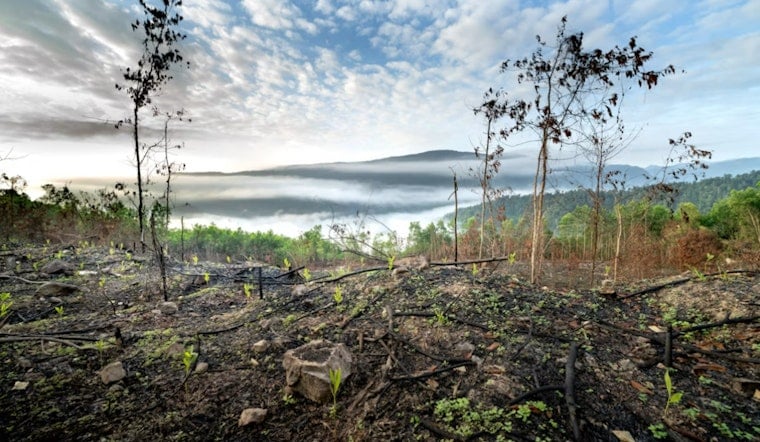
California’s forests are changing faster than the state can put them back together. At the L.A. Moran Reforestation Center near Davis, managers say the core problem is brutally straightforward: not enough seed, not enough nursery space and not enough trained crews to get seedlings in the ground at the scale today’s wildfires demand. That shortage is already putting watersheds, wildlife habitat and the state’s long-term carbon storage goals at risk.
Inside the L.A. Moran Reforestation Center, reporters found tens of thousands of pounds of frozen conifer seed - one count put the stock at roughly 42,000 pounds - yet that trove suddenly looks modest next to the footprint of recent megafires. A working draft of the state’s reforestation strategy reviewed by journalists estimates that high-severity fires have stripped about 2.3 million acres of California forest in the past 25 years, leaving vast areas unlikely to recover without deliberate planting, as reported by the Times of San Diego.
Federal capacity has not kept pace
Washington has been trying to catch up. The U.S. Forest Service reports that roughly 285,000 acres were reforested nationwide in FY 2025 - the agency’s highest annual total in decades - yet even that record output leaves a large backlog. Peer-reviewed research led by UC Davis ecologist Hugh Safford finds that, after excluding wilderness and areas likely to regrow on their own, the Forest Service replanted under 1.2% of its California lands burned by wildfire between 2016 and 2023, a gap researchers describe as stark. For the agency’s FY 2027 budget materials and context, see the USDA Forest Service documents, and for the peer-reviewed analysis see the Frontiers study.
Seed bank upgrades come with a big price tag
CAL FIRE’s own materials warn that the State Seed Bank must grow dramatically if it is going to keep up. The department’s “At A Glance” report estimates the seed bank would need to expand capacity by more than 300% just to reforest 25% of privately owned forestland, a jump that would require far more cone collection and processing. Upgrading the Lewis A. Moran Reforestation Center will not be cheap: a Department of Finance budget change proposal pegs total project costs at about $26.2 million, and this year’s budget set aside roughly $1.2 million for preliminary planning, according to state budget documents. See CAL FIRE’s At A Glance and the Department of Finance budget change proposal.
What communities should expect
For private landowners, water agencies and local governments, the reforestation gap is likely to show up as higher restoration costs and tougher choices about where limited grant dollars actually go. Experts caution that without faster seed collection, larger nursery output and stable funding, many high-elevation conifer forests are at real risk of converting to scrub over time - a shift that could reshape streamflow and wildlife habitat for decades, as reported by KQED.
Policy decisions are set to play a major role. The draft statewide reforestation strategy currently carries no dedicated funding, and recent reporting indicates that regulatory moves and budget choices could affect hundreds of millions of dollars in resilience grants that now support replanting programs. Those potential shifts make long-term planning to scale up tree planting significantly more complicated, according to reporting in the Los Angeles Times.
State agencies and nonprofit partners are already expanding training programs, Cone Camps and the Reforestation Pipeline Partnership to bring in more cones and grow more seedlings. Officials caution, however, that turning the trend around will require years of steady investment and coordination across state, federal and private players. The Moran center upgrade is one concrete step in that direction, but scientists and managers say the real test will be consistent funding, reliable seed supplies and a durable, well-trained planting workforce.





