

























































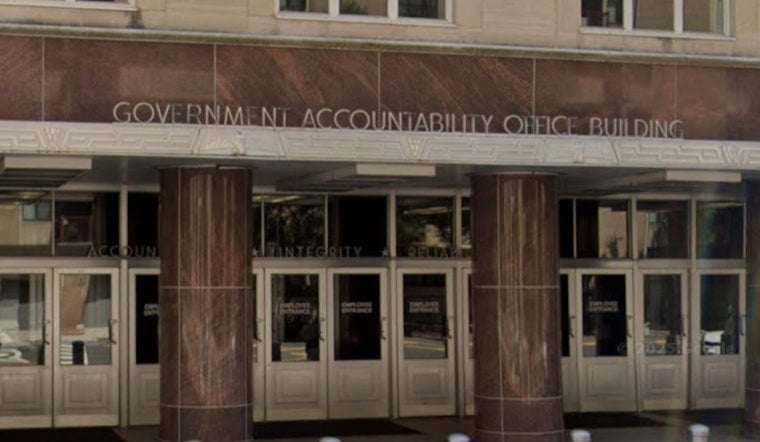
Federal transportation officials are sitting on a pricey problem: office space they barely use but still pay heavily to maintain. The Government Accountability Office says the Department of Transportation is shelling out tens of millions of dollars each year to support a largely empty real-estate footprint in Washington and across the country. The agency’s sprawling portfolio, including the DOT headquarters and the Federal Aviation Administration’s two-building complex in D.C., is sharply underused and costly to taxpayers.
In a 30-page audit released July 15, 2026, the watchdog calculated that 89 percent of DOT’s 189 office buildings failed to meet the 60 percent utilization benchmark set by the USE IT Act. Those 168 underused locations account for roughly $370 million in annual rent, operations and maintenance costs, based on August through September 2025 attendance data, according to GAO. Investigators said they used a 150 usable-square-foot-per-person standard to calculate capacity and warned that DOT’s largest buildings averaged only about a third of that benchmark.
DOT concurs and vows a plan
DOT did not really argue with the findings. In a letter reprinted in the GAO report, Assistant Secretary for Administration Dr. Anne Byrd wrote, “Upon review of GAO’s draft report, the Department concurs with GAO’s recommendations,” adding that the department “will provide a detailed response to the recommendations within 180 days of the final GAO report issuance.” GAO noted that DOT has already begun consolidating some FAA staff into its headquarters but still does not have a definitive housing plan for about 950 FAA employees.
FAA buildings could be returned or repurposed
The report says DOT aims to fully vacate the FAA headquarters complex and return it to the General Services Administration by the summer of 2027. That move would hand control of the Orville and Wilbur Wright federal office buildings back to GSA and leave their fate in that agency’s hands. Local officials have already signaled interest in what might come next: DC News Now notes that GSA could sell, transfer or otherwise dispose of the complex, and that Mayor Muriel Bowser has pushed for ways the city could gain more leverage over federal property to help fill vacant space.
What GAO wants and what taxpayers should watch
GAO recommended that DOT craft a department-wide consolidation plan that leans into space-maximizing strategies, from desk-reservation systems to reconfiguring oversized private offices, to meet the 60 percent utilization requirement and bring down facility costs. The report warns that without clear relocation plans and solid return-on-investment estimates, the consolidation effort could leave the FAA complex underutilized longer than expected and eat into the projected savings.
Taxpayers and D.C. neighbors will have to wait a bit for specifics. With the GAO report dated July 15, 2026, the department’s promised 180-day response window lands around January 11, 2027, when officials said they would lay out more concrete plans and savings estimates. Until then, the audit makes it clear that federal office real estate, especially in D.C., remains an underused budget pressure point that could reshape local development if agencies follow through on trimming their footprints.



