

























































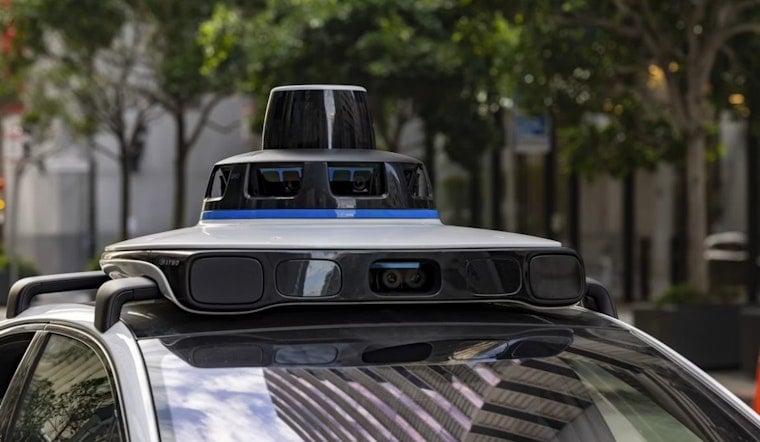
An SMU-led traffic model says a future packed with driverless cars could seriously unclog Dallas–Fort Worth freeways, with delays dropping by as much as one-third in the most optimistic 2045 scenarios. Local pilot programs, recent crashes and ongoing federal investigations, however, suggest those gains are far from automatic and will depend heavily on how autonomous fleets are managed and regulated.
How researchers modeled the future
The analysis, published in the Journal of Urban Technology, fed microscopic traffic simulation results into the North Central Texas Council of Governments’ regional travel model (TAFT). Authors Khaled Abdelghany, Behruz Paschai, and Abby Morgan ran 25 experiments across a 13-county DFW region to compare scenarios with 0%, 25%, 50%, and 100% fully autonomous vehicles and to test vehicle-to-signal communications and vehicle relocation effects.
Results: Big gains, but with conditions
In the paper’s most aggressive scenario, with 100% autonomous cars on the road, modeled delays dropped by up to 33%, and daily vehicle-hours traveled fell by at least 19% under a relocation assumption, SMU reported. “Traffic congestion is often driven not only by high demand but also by speed variability and stop‑and‑go behavior, which reduce flow efficiency,” Abdelghany said in a release, arguing that smoother, coordinated driving is the main reason for the potential savings. The study also found that direct communications between vehicles and traffic signals added only a modest extra benefit compared with speed harmonization on highways and major arterials.
How the math meets reality
The findings align with hard, local evidence of heavy congestion and competing research that shows mixed outcomes from automation. A 2024 INRIX traffic scorecard details how drivers in major U.S. metros lose dozens of hours a year to slowdowns, and corridor data point to stubborn bottlenecks in DFW. At the same time, a recent Transport Findings analysis of Waymo’s early California operations found that robotaxis logged a large share of miles with no passenger onboard, raising concerns about deadheading, and UC Davis research has shown that growth in ride‑hailing can reduce public‑transit use, trends that could blunt the congestion benefits modeled by SMU.
Safety problems complicate the picture
Deployment on real streets has been bumpy. Federal records and reporting say the National Highway Traffic Safety Administration opened an inquiry after Avride, an Uber partner, was tied to multiple collisions in Dallas and Austin, prompting fresh scrutiny of on-street robotaxi performance. Waymo has also paused or limited some operations and issued fleet software recalls after vehicles drove into flooded roadways, raising questions about behavior in extreme weather. High-profile crashes involving partially automated systems have further fed public skepticism; in one recent Texas case, a driver linked to a Tesla crash that killed a homeowner was charged with manslaughter, according to local reporting.
Policy choices will decide the outcome
The SMU modeling relied in part on support and data from regional agencies, and the team used tools that planners already depend on. That serves as a reminder that whether DFW ever sees the modeled gains will come down to operator practices, state and local regulations, and land-use decisions. If autonomous fleets increase empty repositioning miles, encourage longer commutes, or accelerate sprawl without matching transit investments, planners warn the theoretical wins could quickly evaporate.
For Dallas drivers, the study offers a sharper look at what an automated future might deliver, but not a promise. As local pilots expand and federal investigators continue to review early fleets, residents and officials will be watching closely to see whether the theory actually translates into less time spent staring at brake lights on the freeway.





