

























































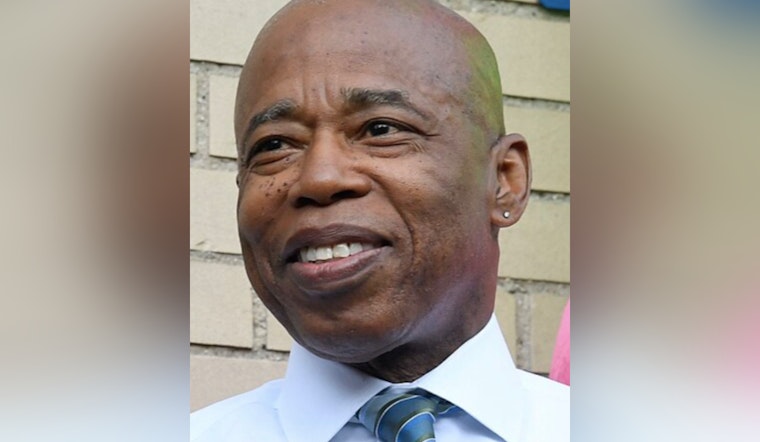
Eric Adams is out of City Hall, but he is not exactly retiring from New York’s housing fight. In a new interview, the former mayor lays out a post-office career advising companies and governments on infrastructure, energy and construction technology while taking pointed shots at Mayor Zohran Mamdani’s approach to housing. The message is familiar: build more, keep investors interested, and do not treat real estate like the villain in New York’s affordability saga.
Adams, now a private citizen, appeared on Coffee Talk with Amir Korangy and said he is advising clients on everything from corrosion-resistant rebar to clean-energy systems, according to The Real Deal. He also said he still rides the subway and uses Citi Bikes, a reminder that his political brand remains tied to the city’s daily rhythms even after leaving office. But the more consequential part of the conversation was his warning that Mamdani’s housing agenda could unsettle the developers and investors New York still needs.
City Of Yes Is Adams’ Housing Calling Card
The centerpiece of Adams’ self-defense is City of Yes for Housing Opportunity, the citywide zoning overhaul adopted in December 2024. The plan allows more housing types and greater density in neighborhoods across the five boroughs, and NYC Planning says the final version is expected to enable roughly 82,000 homes over 15 years.
That is a smaller projection than the proposal’s early estimate, but it is still a major policy shift in a city that has spent decades rationing new apartments through restrictive zoning. Adams is clearly trying to make City of Yes the durable part of his legacy, especially as Mamdani seeks to claim the housing issue with a very different political vocabulary.
Mamdani Wants More Housing, But A Different Deal
Mamdani’s administration has not rejected the need to build; it has rejected the idea that private development should be the city’s primary answer. Its Block by Block plan calls for 200,000 new affordable homes and the preservation of another 200,000 over the next decade, backed by a proposed $22 billion housing investment over five years.
Adams’ critique is aimed at the tension inside that agenda. He warned that rhetoric portraying the real estate industry as an adversary could discourage investment, according to The Real Deal. The former mayor’s argument is not that developers deserve a blank check; it is that New York cannot simultaneously demand a historic construction push and make the people expected to finance it feel politically radioactive.
There is real policy substance behind that warning, even if it does not settle the argument. The city’s 421-a tax break expired for new projects in June 2022, and the New York City Independent Budget Office has noted that existing exemptions will continue affecting city finances for decades. The fight over incentives, rents, wages and public subsidies is therefore not just a clash of personalities; it is a fight over who absorbs the cost of building in one of the most expensive construction markets in the country.
Adams’ Legal Chapter Still Shadows The Comeback
Adams also enters this next phase with a political record that is difficult to separate from his legal saga. A federal judge dismissed his corruption indictment with prejudice in April 2025, ending the prosecution before trial, according to the U.S. District Court for the Southern District of New York. The dismissal was not a trial verdict on the allegations, but Adams is no longer a defendant in that case.
The emerging picture is less a retired mayor wandering into a second career than a former mayor trying to keep his governing theory alive from outside City Hall. Adams’ next act may involve infrastructure consulting and energy technology, but his real pitch is still political: New York needs more housing, and the people who build it cannot be treated as enemies. Mamdani will get the next chance to prove whether the city can produce that housing on a different set of terms.





.jpg)