

























































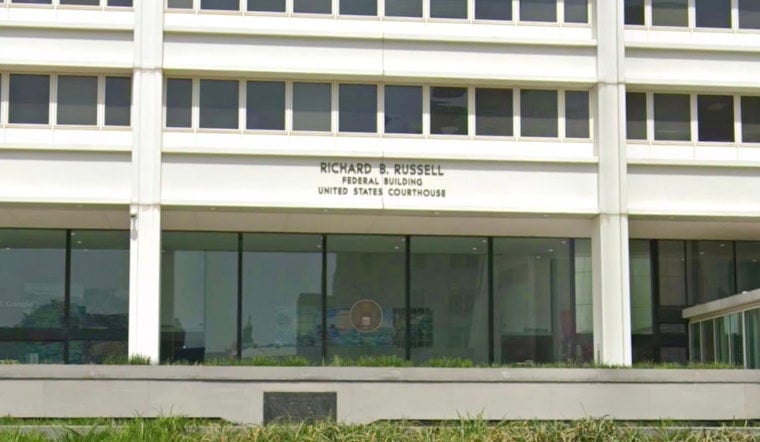
A onetime Atlanta accountant is headed to federal prison for four years after a jury found he helped launder $5.3 million that had been siphoned away from Children’s Healthcare of Atlanta. Prosecutors say the cash was diverted after criminals hijacked a vendor’s email account, and investigators ultimately clawed back roughly $4 million.
According to a press release from the U.S. Attorney’s Office for the Northern District of Georgia, 66‑year‑old Ronald Deabler was convicted by a jury on February 12, 2026. On July 22, 2026, he was sentenced to four years in prison, followed by two years of supervised release, and ordered to pay $682,860 in restitution.
How the scheme unfolded
Prosecutors say that in early June 2023, a hacker slipped into the email system of a commercial furniture vendor, pretended to be an employee, and changed the vendor’s bank account information on file with Children’s Healthcare of Atlanta. On June 13, 2023, the hospital wired $5.3 million to the account supplied by the hacker. Deabler then moved more than $1 million into a separate account and converted about $3.5 million into four cashier’s checks, which he mailed out as instructed. The hospital and the vendor spotted the scam within days, and after bank tracing, investigators recovered roughly $4 million, as reported by WSB‑TV.
Why this fits a common scam
The playbook here will look familiar to fraud investigators: it is a textbook business email compromise, or BEC, in which criminals hijack legitimate accounts to quietly reroute wire payments. The FBI’s Internet Crime Complaint Center (IC3) reported in its 2025 annual report that BEC schemes accounted for billions in losses, including more than $3 billion in the prior year, and remain among the costliest forms of online fraud, according to FBI IC3.
Prosecution and recovery
The case was investigated by the FBI and prosecuted by Assistant U.S. Attorneys Tracia M. King and Phyllis Clerk. “Deabler used his knowledge of the banking system to launder millions of dollars,” U.S. Attorney Theodore S. Hertzberg said, and FBI Atlanta Special Agent in Charge Marlo Graham added that “criminals who steal from a children’s hospital are not just committing financial fraud,” according to the U.S. Attorney’s Office for the Northern District of Georgia. The office said recovered funds were seized from Deabler’s accounts and from the bank accounts that received his cashier’s checks.
The sentence caps a federal case that prosecutors say struck at both a major pediatric hospital system and the public trust behind it. It also serves as a pointed reminder that nonprofits are far from immune to sophisticated wire fraud, and that rapid bank tracing and tight vendor controls can make the difference between a massive loss and a partial recovery.



