

























































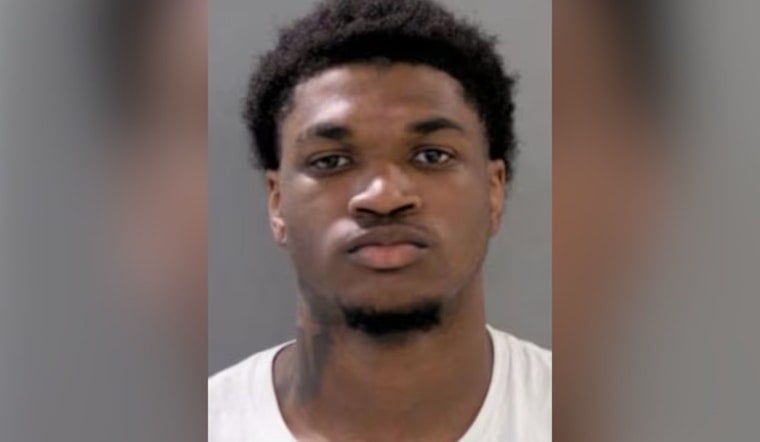
A 19-year-old former Detroit Police Department trainee is now facing a felony reckless-driving charge after a Feb. 28 predawn crash on the city’s west side that killed a 33-year-old pedestrian. Prosecutors say the collision happened around 5:40 a.m. on Grand River Avenue near St. Mary’s Street, and that the driver stayed at the scene and cooperated with investigators. The case has drawn extra attention because the driver had recently graduated as a police cadet and later served for a short time as a probationary officer.
According to ClickOnDetroit, Keyshawn Elijah James Rucker was charged on Tuesday with one count of reckless driving causing death and was arraigned the same day. Court records cited in that report show Rucker resigned from the department on April 6. A judge set a $50,000 personal bond for his release, and he is scheduled to return to the 36th District Court for a probable-cause conference next Wednesday at 8:30 a.m.
The filing lands in the middle of a string of high-profile vehicular-death prosecutions in Wayne County this year, as local prosecutors pursue felony counts in deadly crashes. The Wayne County Prosecutor's Office announced charges in a February crash on Rosa Parks Boulevard that included a reckless-driving count, highlighting how officials are approaching similar cases.
Legal implications
Reckless driving causing death is a felony under Michigan law that can carry a sentence of up to 15 years in prison. In its 2014 opinion in Michigan Courts, the Michigan Supreme Court explained that the statute (MCL 257.626) applies when a driver operates a vehicle in “willful or wanton disregard” for the safety of others and causes a death, elements prosecutors must establish for the charge to stand.
What’s next
Rucker remains free on a $50,000 personal bond and is due back in court for the probable-cause conference on July 15, according to records reported by ClickOnDetroit. If prosecutors clear that probable-cause bar, the case could move to a preliminary examination, where a judge will decide whether there is enough evidence to send the charge to trial.
The case is already prompting closer scrutiny of training, supervision and roadway safety as it works its way through Detroit’s courts, with future filings and official statements expected to shed more light on what happened and how the justice system will respond.





