

























































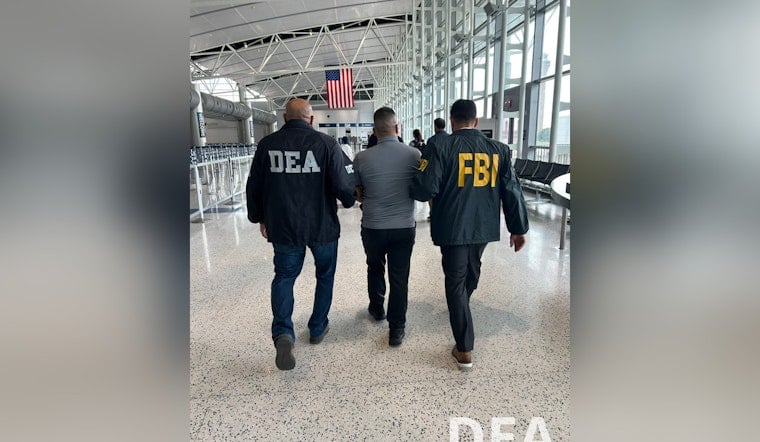
Houston’s federal courthouse just landed a heavyweight case. A member of the Revolutionary Armed Forces of Colombia (FARC) was extradited to the city on Friday to face federal charges that include narco-terrorism and providing material support to a foreign terrorist organization, authorities said.
The transfer to U.S. custody was announced by the Drug Enforcement Administration’s Houston division in a social post late Friday. Prosecutors in the Southern District of Texas are expected to file formal charges and schedule an initial court appearance, and officials released few additional details in the brief notice.
As posted by DEA Houston, the extradition “reflects the strength of law enforcement partnerships locally and across the globe.” The social post also mentioned the agency’s national office and the Department of Justice and tagged the FBI’s Houston field office. The announcement did not name the defendant or specify the country that surrendered him, and officials did not immediately publish court documents, keeping most of the case behind the curtain for now.
Charges and penalties
Narco-terrorism and material-support counts carry steep penalties under federal law, including mandatory minimums in some situations. As outlined by the Justice Department, narco-terrorism allegations have featured in recent high-profile indictments and can expose defendants to decades in prison or even life behind bars.
The material-support offense, codified at 18 U.S.C. § 2339B, makes it a crime to knowingly provide funds, personnel, weapons or services to a designated foreign terrorist organization, according to Congress.gov. Those charges often travel alongside narcotics allegations when terrorism designations are involved, which helps explain why this case is landing in a major hub like Houston.
Why Houston?
Houston’s federal courts have increasingly handled extraditions and prosecutions that tie drug trafficking to terrorism designations, and the Southern District is a common venue for that kind of hybrid case. In May, federal prosecutors in Houston announced the extradition of a suspected Tren de Aragua leader to face charges that included providing material support to a foreign terrorist organization, underscoring the interagency coordination required to move suspects from overseas, as described by the U.S. Attorney’s Office for the Southern District of Texas.
The Drug Enforcement Administration has also pursued FARC-related narco-terrorism cases in other federal districts, as reflected in a separate indictment highlighted in a press release from the DEA. Taken together, the cases show how narcotics and terrorism statutes are being used in tandem against transnational networks.
What happens next
If formal charges are filed, court records and an initial appearance should be posted to the Southern District of Texas docket relatively quickly. That first round of hearings may include an arraignment and a detention hearing that will determine whether the defendant remains in custody while the case moves forward.
Defendants charged with narco-terrorism or material support face lengthy sentences if convicted, but an indictment is only an allegation, and defendants are presumed innocent until proven guilty in court. For now, federal authorities say the extradition reflects ongoing efforts to use terrorism and narcotics tools together to dismantle violent transnational networks. Prosecutors have not yet released charging documents or a public schedule for the case.



