

























































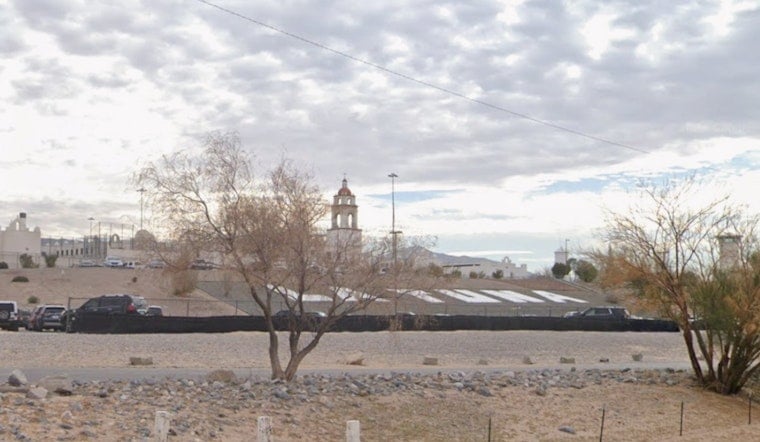
La Tuna federal correctional complex, a long-standing fixture near the Texas–New Mexico line, is officially on the chopping block. On July 1, the U.S. Department of Justice announced plans to close the low-security Federal Correctional Institution in Anthony, Texas, along with its Federal Satellite Low and adjoining minimum-security camp. The decision, affecting a complex that has operated in the area since the early 1930s, will displace staff and force the Bureau of Prisons to rehouse or transfer people in custody as it reshapes its nationwide prison footprint.
Which facilities are on the closure list
The Bureau of Prisons said the La Tuna complex is one of six institutions the agency will permanently close as part of a targeted set of operational changes. In a July 1 news release, the agency named Beaumont FCI Low, Big Spring FCI and satellite camp, La Tuna (FCI, FSL and camp), Lexington FMC satellite camp, Petersburg FCI Low and Taft FCI, according to the Bureau of Prisons.
How many people are housed at La Tuna?
Local reporting puts the La Tuna complex’s current population at about 712 men, with roughly 551 housed at the FCI and 161 at the satellite camp, while the site’s Federal Satellite Low is described as non-operational. That breakdown was reported by the El Paso Times, which first covered the DOJ announcement in West Texas. Family members and local stakeholders say they are now waiting for details on where people in custody will be moved.
BOP cites a multi-billion maintenance backlog
The Bureau told reporters the closures are a response to decades of deferred maintenance and severe staffing shortfalls. In its news release, the agency said it faces a deferred-maintenance backlog that exceeds $4 billion. BOP Director William K. Marshall III said in the release, "We are a Bureau that acts," and the agency noted that some staff will be reassigned while other sites will see a reduction-in-force. The Bureau of Prisons also said Morgantown FPC and Duluth FPC will be reclassified from minimum camps to satellite low facilities as part of the changes.
What this means for staff and the region
The announcement states that employees at certain closing sites will be transferred to other units onsite or to nearby facilities, while reductions-in-force will take effect at others, a mix that local outlets report could send economic shockwaves through small border communities that rely on prison jobs. The El Paso Times reports that BOP officials have pledged to support affected workers as the agency finalizes placement decisions and mission needs. Local leaders and advocates say they are pushing for clearer timelines and relocation plans for both people in custody and staff who will be reassigned or separated.
A local landmark since 1932
La Tuna has long been woven into the fabric of Anthony and the greater El Paso area. Architectural records attribute the complex’s Spanish-mission-inspired design to Gustavus A. Trost and date the original construction to 1931–32. The Trost archive and local historical documentation trace the early drawings and building of the facility, adding a historical layer to what many residents see as the end of a long era. Henry Trost’s building archive offers additional background on the design and early plans for the institution.
The Bureau has said it will work to support affected employees during the transition and that operational details, including how and when people in custody will be moved, will be finalized in the coming weeks. Local officials, families, and advocates say they intend to keep pressing for a clear timetable and specific information about where inmates will be transferred.




