

























































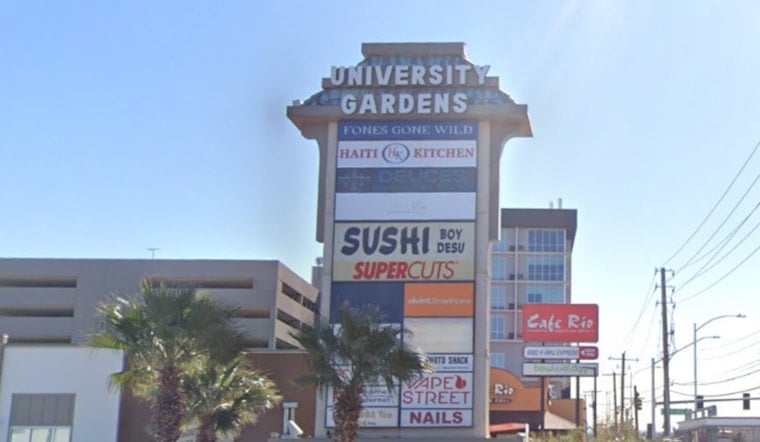
The two-story core of University Gardens, the small shopping plaza across from UNLV, has gone from fire scene to bare lot. After a three-alarm blaze last summer left the middle of the strip mall a charred wreck, demolition crews moved in, tearing down the north and south wings of the two-story center and hauling away debris. What is left on Maryland Parkway is a visible gap where familiar storefronts once stood and, for business owners who lost inventory and equipment, the end of one chapter and the start of a very uncertain rebuild or relocation process.
Clark County building records show the property owner applied for and received a demolition permit after the July 25, 2025 fire. County files indicate crews had removed the damaged sections and cleared debris by mid-May 2026. A demolition permit issued Aug. 12, 2025 listed the work valued at about $81,000, as reported by the Las Vegas Review-Journal.
What Burned And Who Was Affected
The July 25, 2025 blaze gutted the center portion of the strip mall at 4632 S. Maryland Parkway, destroying a U.S. post office and several small businesses while leaving adjacent single-story units soaked by water and smoke. Owners took to social media to describe total losses and mourn longtime neighborhood fixtures. UNLV coverage of the plaza described how the center had served everyday needs for students and nearby residents, underscoring that this was more than just another strip center on a busy corridor.
Why The Middle Section Came Down
Fire investigators reported temperatures climbed to 1,000 degrees or higher in places, and county officials noted the two-story section predated modern sprinkler rules and did not have an automatic suppression system. Officials estimated the blaze caused roughly $6 million in damage. Landlord Steven Gryczman wrote to the county that he needed to remove the north and south wings, and Clark County noted it did not issue a formal abatement order because the landlord voluntarily applied for a demolition permit, according to the Las Vegas Review-Journal.
Aftermath And Next Steps
With the structural hazard removed, displaced tenants now face the practical grind of replacing lost equipment, finding new storefronts and trying to recover lost income. Owners quoted in neighborhood and university coverage called the loss “devastating,” and UNLV’s feature on the area highlighted how much daily life had relied on those storefronts. For now, community attention is fixed on whether the owner or the city will roll out any redevelopment plans or support for the displaced operators, per coverage from UNLV.





