

























































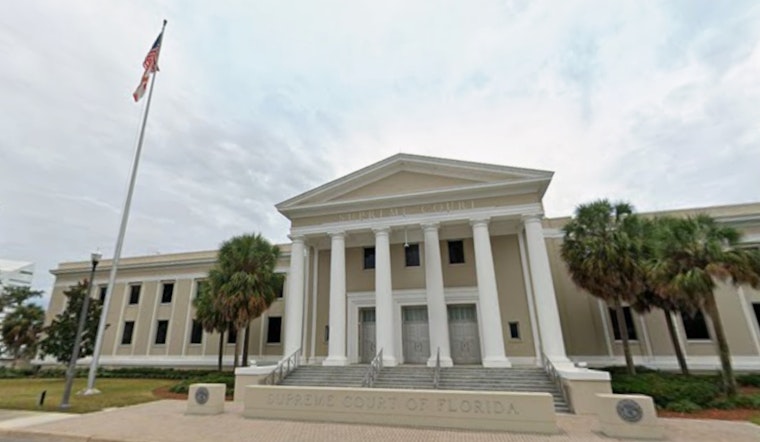
In a ruling that gives prosecutors more breathing room on flawed drug raids, the Florida Supreme Court held 6-1 last Thursday, that evidence from a Leon County search cannot be tossed out just because officers failed to give residents enough time to answer the door after announcing a warrant. The court quashed the First District Court of Appeal’s suppression order and formally receded from State v. Cable, a 2010 decision that had required exclusion of evidence for statutory knock-and-announce violations.
What the court said
Justice Meredith Sasso, writing for the majority, focused on the text of section 933.09 and concluded that nothing in the statute authorizes judges to throw out otherwise valid evidence when officers rush the door. She said courts should not invent a suppression remedy when the Legislature has chosen a different way to enforce the rules for search warrants. As Sasso put it, “the inclusion or omission of remedies for statutory violations is a legislative prerogative.” Florida Supreme Court.
How the raid unfolded
The case stems from a Leon County investigation in which the Florida Department of Law Enforcement and the Tallahassee Police Department executed a search warrant after knocking and announcing twice, then used a battering ram to force their way in just seconds after saying they had a warrant. Inside, officers reported finding cocaine, MDMA, more than $23,000 in cash and two firearms. The resident, Keith Alexander Times, was charged with trafficking in amphetamines, possession of cocaine and possession of a firearm by a convicted felon, according to the Tampa Free Press.
Split court, lone dissent
Justice Jorge Labarga broke sharply with the majority. In dissent, he warned that stripping suppression out of the toolkit would weaken protections for life, property and the privacy of residents during sudden forced entries. Labarga pointed to what he described as “the absolute absence of criminal prosecutions against law enforcement officers” under the chapter’s misdemeanor provision and argued that the exclusionary rule remains a crucial judicial sanction to keep officers in line. Florida Supreme Court.
What this means in practice
By answering the certified question in the negative and sending the case back to the lower court, the justices cleared the way for prosecutors to use the seized drugs, cash and guns at trial unless some other legal bar applies. Defense lawyers and civil-rights advocates say the ruling trims back one of the judiciary’s main tools for discouraging sloppy or dangerous home entries, while lawmakers could still change that balance by rewriting the statutes. Legal summaries of the decision are collected on Justia.
Legal implications
Florida’s section 933.09 spells out when officers can break open a door to execute a search warrant and requires that they give due notice of their authority and purpose. Section 933.17, in turn, creates a misdemeanor for any officer who “willfully exceeds” authority while carrying out a warrant. The Supreme Court treated that criminal penalty as the Legislature’s chosen remedy and declined to read an exclusionary rule into the statutes without clear language saying so. For the specific wording, see section 933.09 in the Florida Statutes and section 933.17 in the Florida Statutes.





