

























































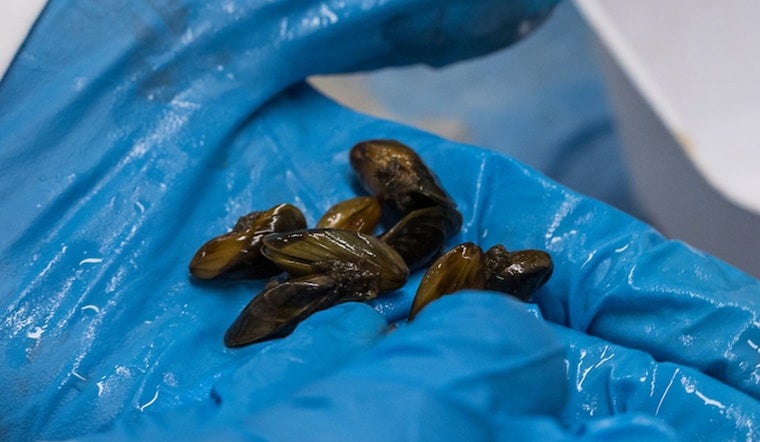
Yolo County is officially on mussel alert. Supervisors declared a local emergency this week after invasive golden mussels turned up near West Sacramento, the latest twist in an infestation already pushing neighboring governments into crisis mode. The move gives county leaders emergency authority to seek outside help and fast-track repairs to pumps, intake screens and other water infrastructure that could be coated in shells instead of water. Boaters and anglers around the Delta are being warned that their routine cleanup habits could be the thin line between a contained outbreak and long-term damage.
State wildlife officials confirmed the northernmost detections this summer in and around the Port of West Sacramento, with specimens collected between the Jefferson Boulevard overpass and the west lock and additional mussels found at nearby Washington Lake, according to CDFW. The department said genetic testing confirmed the specimens on June 25 and urged heightened inspections and reporting as crews fan out across docks and intake structures.
San Joaquin County first proclaimed a local emergency in late April, citing fouled intake screens and immediate threats to irrigation and municipal systems, and Sacramento County followed with its own declaration in June. San Joaquin County and Sacramento County have both warned that mussel colonies can clog pipes and pumps, and the City of Stockton has moved to ratify a city-level emergency to speed up contracting. FOX40 reports Yolo’s board has now joined that growing list.
Why golden mussels are so hard to stop
Golden mussels do not spread politely. They produce microscopic free-swimming larvae called veligers that can hang in the water column for days to weeks and catch rides in bilges, bait buckets and ballast tanks, making overland spread hard to spot until it is well underway. CDFW and federal river managers note that adult mussels latch onto almost any hard surface and tolerate brackish conditions, which dramatically widens the number of vulnerable waterways. Once established, dense colonies can encrust intake screens, pipes and pumps and choke off flow until equipment is cleaned or replaced.
What a local emergency actually does
Despite the dramatic name, a local emergency does not change criminal law. What it does do is unlock a set of administrative tools: counties can formally request state and federal assistance, suspend certain purchasing limits and authorize emergency contracts to move repairs and monitoring faster. Sacramento County says those powers help coordinate a regional response and document costs for potential reimbursement, and San Joaquin County has framed its own declaration the same way.
How boaters and residents can help
Officials keep coming back to a simple three-word mantra: Clean, Drain, Dry. Rinse or remove visible plants, animals and mud from boats and gear, drain bilges, live wells, motors and bait buckets, and let everything dry completely for at least five days, or use hot-water decontamination before heading to another waterbody, per FWS guidance. CDFW also urges anyone who finds suspect mussels to report sightings to [email protected] or call 1-866-440-9530.
“We need a coordinated regional response that helps protect water reliability, flood-control systems, agriculture and local infrastructure,” Yolo County Board Chair Oscar Villegas said in a statement to FOX40. For now, water agencies and recreational users are the first line of defense against an invader that officials warn can spread faster than crews can clean.





