

























































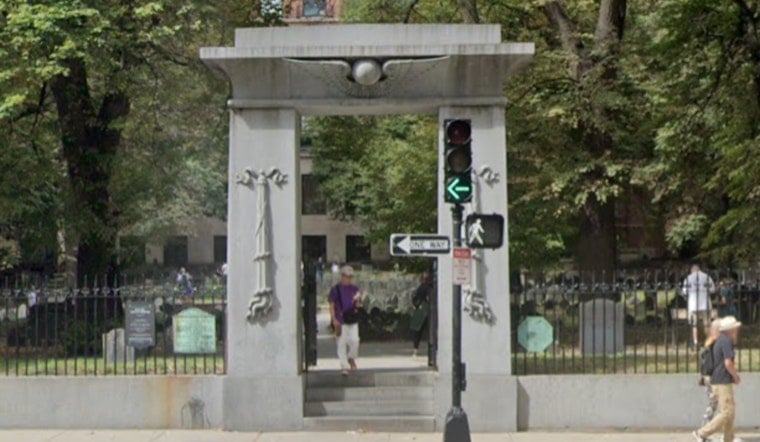
Tucked inside Boston’s Granary Burying Ground, conservators have uncovered and restored a fragile slate gravestone that city officials say is likely one of the oldest surviving markers for a free Black person in the United States. City researchers have linked the stone to a man identified as Sebastian Lake, who they believe was once enslaved and later died free in 1729. Mayor Michelle Wu revealed the discovery during her Independence Day oration at Faneuil Hall.
City archaeologists and conservators say the team painstakingly cleaned and stabilized the delicate slate, then cross‑referenced early‑18th‑century burial records with the inscription. The city has described the find as a major window into the lives of Black Bostonians in the colonial era, according to WCVB. In her address, Mayor Wu called it "likely one of the oldest gravestones of a free Black person in America," underscoring Boston’s effort to bring long‑overlooked stories into public view.
Granary's role and the city's markers program
The Granary Burying Ground, at 120 Tremont Street in downtown Boston, is the city’s third‑oldest cemetery and holds thousands of colonial‑era markers that draw crowds along the Freedom Trail, according to Boston.gov. City officials noted that the announcement arrives as Boston launches a new Historic Markers Program and an interactive Tour250 map that will place dozens of fresh interpretive markers across neighborhoods in an effort to widen the range of stories told in public space.
How researchers confirmed the stone
According to conservators and city researchers, conservation treatments and careful cleaning brought out inscription details that could then be matched to town records and burial registers, allowing them to tentatively identify the marker as belonging to Sebastian Lake, as reported by WCVB. City archaeologists have also been leaning on historic maps for recent projects, and officials note that a 251‑year‑old map helped locate a Revolutionary War fort, while trenching near the Bunker Hill Monument turned up musket balls and gunflints, all part of a broader push to recover colonial‑era material culture.
Why the find matters
Preservationists say that well‑documented finds like this can quietly rewrite local history by putting names and dates to people who were largely left out of traditional narratives. Reporting has indicated that hundreds of Black residents are likely buried in early Boston cemeteries without clear markers, which underscores why ongoing conservation work and new interpretive signage carry such weight, according to WGBH.
City officials say further documentary and material analysis is underway to learn more about Sebastian Lake’s life and historical context, and that conservation and interpretive planning will continue through the Historic Burying Grounds Initiative and the city’s markers program, per Boston.gov. The work, they add, is part of a larger effort to ensure Boston’s public landscape reflects a much broader cross‑section of the city’s histories.





