

























































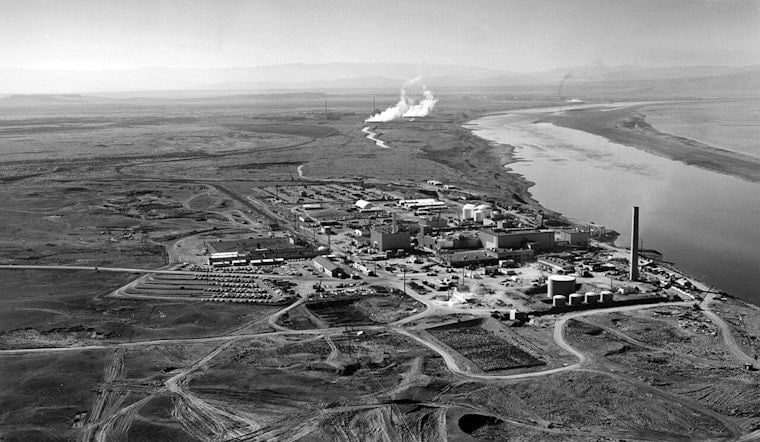
On Monday, the U.S. Department of Energy quietly kicked off a big shift at the Hanford Site, sending a byproduct of its new vitrification operations to a treatment facility in Richland to be solidified as grout. It is the first full-scale shipment of Effluent Management Facility (EMF) concentrate for offsite grouting, and it marks a broader pivot toward using both grout and glass to speed cleanup while freeing up space in the Waste Treatment Plant.
DOE says grouting will free up space and speed cleanup
In a July 13 press release, the Department of Energy said Hanford completed its first transfer of EMF concentrate to a local offsite facility for grouting and that the necessary permit is in place. DOE officials said the shift will allow the Waste Treatment Plant to process roughly 20% more tank waste by avoiding reprocessing the secondary stream, and will shorten schedules and save money. “This new strategy reflects our commitment to expediting the Hanford cleanup mission in an innovative, efficient and safe manner,” Hanford Field Office Manager Ray Geimer said in the release.
What EMF concentrate is and why it matters
The EMF concentrate is the condensed liquid left after vapors are removed from the vitrification process, and it has typically been recycled back to the plant or held for further treatment, according to Hanford Site. The Government Accountability Office found that vitrifying one gallon of low‑activity waste produces roughly one to three gallons of secondary waste that must also be managed, which helps explain DOE’s interest in supplemental treatments like grouting. Grout is a cement‑like matrix that immobilizes contaminants and can be shipped to permitted commercial disposal sites once hardened.
State and regional regulators raise red flags
The Washington State Department of Ecology has said it will consider alternatives but insists any treatment disposed of at Hanford must be “at least as good and effective as vitrified glass,” and it opposes disposing grouted waste onsite because of Hanford’s shallow groundwater and proximity to the Columbia River, per the Washington Department of Ecology. Neighboring Oregon has also objected to the prospect of liquid shipments through its state, urging DOE in a March comment letter to solidify waste before it leaves the Hanford region and calling for more analysis of transport and disposal capacity. Oregon’s letter raised concerns that shipping untreated liquid could strain receiving sites. Those tensions reflect broader worries about moving tens of millions of gallons of pretreated tank waste through communities and commercial facilities.
Costs, capacity and legal risks
Federal auditors say grouting could substantially reduce lifecycle costs and speed treatment, but also flagged legal and technical uncertainties that could prompt litigation and delay work, according to a GAO review. The GAO noted DOE has tested the approach with a small pilot and issued solicitations to grout millions of gallons, but warned that disagreements over treatment standards and classification could extend schedules. Local reporting adds that some concentrated secondary waste from the vit plant is being transported to Perma‑Fix Northwest in Richland for grouting and then headed to commercial sites in Utah or Texas for disposal, a path described in Tri‑City Herald coverage.
What comes next for Hanford cleanup
DOE says the move is part of a “dual glass‑plus‑grout” strategy intended to accelerate cleanup while continuing vitrification of the most radioactive material. Under the Tri‑Party Holistic Agreement, DOE plans to retrieve and treat waste from 22 tanks in the 200 West Area and is evaluating offsite disposal for grouted material. Public comment periods and permit changes are underway and the Hanford Field Office has been holding open meetings and technical briefings to walk stakeholders through options, according to Hanford public records. How quickly grout will scale beyond the initial EMF concentrate transfer will depend on technical reviews, contract awards, and whether regulators or critics mount legal challenges.
For Tri‑Cities residents, the debate comes down to speed versus long‑term protection. DOE argues grout will pull more waste out of aging tanks faster, while state, tribal and regional officials want iron‑clad evidence that solidified grout and offsite disposal will not trade near‑term gains for groundwater or transport risks. Expect more public sessions, plenty of pointed questions, and a long, argumentative regulatory process before the full scope of grouting at Hanford is settled.



