

























































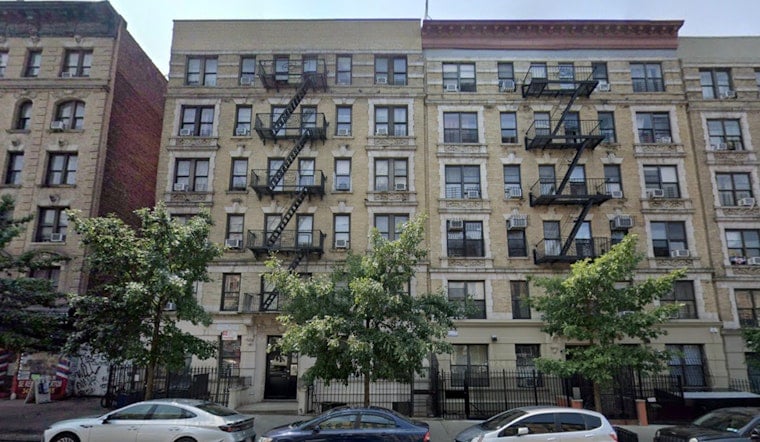
When a West Harlem rental building at 502 West 135th Street hit the market for $1.375 million, New York Apartment Association executive Jay Martin jumped on X to highlight the bargain price, calling it “less than the price of a Kia Telluride” and breaking it down to roughly $57,000 per unit. His post poured fresh gasoline on an already heated debate over whether state rent rules and higher borrowing costs have gutted the value of rent-stabilized buildings.
Less than the price of a Kia Telluride. $57,000 per unit.
— Jay Martin (@jaymart222) July 18, 2026
Martin’s Post And The Listing That Lit Up Landlord Twitter
Industry press quickly seized on the exchange, reproducing Martin’s post alongside the listing that triggered it, according to The Real Deal. Once it hit wider circulation, users piled on. Some insisted the $1.375 million ask had to be a typo, while owners countered that the number reflects a broader market reset for heavily regulated buildings.
What The Broker Pitch Books Say
Broker marketing paints a more granular picture. An offering packet from GFI Realty describes 502 West 135th Street as a 25-unit, 19,056-square-foot walk-up that previously carried an asking price north of $2 million. Commercial listing portals, meanwhile, show the property as having between 24 and 25 units, depending on which posting and update date you are looking at.
Those various listings include details like the rent roll, the unit mix and different underwriting assumptions, all of which shift with the broker and the moment in the market. The result is a single building that can be presented at very different price points to very different audiences, from small local buyers to institutional investors.
2019 Sale And The Purchase Math
On the investment side, records show that Klosed Properties, led by Steven Kachanian, Jacob Namdar and Adam Hajibai, paid about $3.6 million for the building in April 2019, which worked out to roughly $144,000 per unit at the time, according to reporting compiled by Traded. The purchase was structured with leverage, and that financing has been central to how the building’s value has shifted since.
Debt, Rent Rules And The Squeeze On Values
Owners reportedly extended a mortgage of about $2.5 million in 2024 at an interest rate near 8 percent, a cost that coverage from The Real Deal translates to roughly $700 of interest per unit each month. In a building full of rent-stabilized apartments, that kind of debt service can easily swamp modest, regulated rents.
Industry analysis has also pointed to the 2019 Housing Stability and Tenant Protection Act. By sharply limiting vacancy-related rent hikes and restricting certain pass-through costs, the law has driven steep repricing for some rent-regulated properties, according to a market newsletter from BKREA.
For tenants watching a full Harlem building listed for less than a new SUV, the headlines can sound like an invitation to band together and buy the place. Brokers, however, note that pooled tenant purchases run into the same cold math as any other buyer. Debt payments, property taxes, insurance and long-postponed repairs can quickly make ownership more expensive than simply continuing to rent. The 502 West 135th Street listing has become a local case study in how shifts in law and lending have reshaped what stabilized buildings are worth, and who can realistically lay claim to them.


