

























































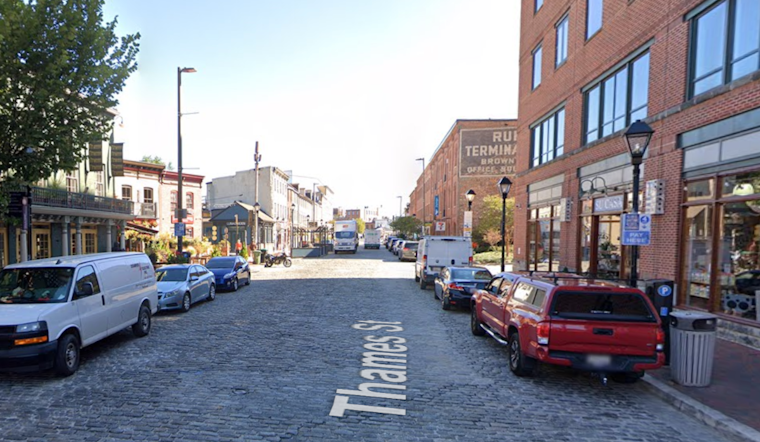
A walk along Fells Point’s busy Thames Street turned suddenly painful for a Baltimore woman when a metal bolt hidden in the sidewalk punched straight through her shoe and into her foot, leaving her bandaged and recovering at home. Emergency medical technicians treated her at the scene, removed the bolt from the sidewalk and handed it back to her, and she says she has since filed a complaint with the city. Neighbors and regulars in the waterfront corridor say the incident is a harsh reminder that some of the city’s most familiar blocks can still hide very real hazards underfoot.
What happened on Thames Street
Meghan Clark told WBAL‑TV that she stepped directly onto a concealed bolt that was sticking up from the sidewalk. The metal spike went through her shoe and into her foot before first responders arrived. According to the station’s report, emergency crews cut the bolt out of the concrete on the spot and gave it back to her as they finished treatment.
Clark told the station she expects to be out of work for several days and has submitted a formal complaint to the city. WBAL‑TV also reported that it reached out to the mayor’s office and the city’s Department of Transportation for comment on the incident.
Who pays to fix sidewalks?
Under Baltimore law, the responsibility for day-to-day upkeep of sidewalks usually lands on the shoulders of the adjacent property owner. Owners are required to keep the stretches of sidewalk next to their buildings in good repair, while the Department of Transportation has the power to order or perform work and then bill those owners, according to the Baltimore City Code.
A Mayoral Fellowship report on sidewalks details how the Department of Transportation inspects potential hazards, issues notices to owners and, when needed, carries out emergency work that can later be assessed back to the property. On a block like Thames Street, where every inch of concrete sees traffic, that process can make the difference between a routine stroll and a trip that ends with an ambulance crew cutting hardware out of the pavement.
How to report a dangerous sidewalk
Clark said she filed a complaint with the city after she was injured. Anyone who spots what looks like a hazardous sidewalk condition in Baltimore can do the same by submitting a service request through Baltimore 311 or by calling 311 directly.
The Baltimore 311 site explains how to upload photos, drop a pin on the exact location, and include details that help Department of Transportation crews track down a specific spot. From there, the agency can inspect the area and decide whether it needs a quick temporary fix or a more permanent repair.
Why this matters
Fells Point’s waterfront streets pull in heavy foot traffic on warm nights, which turns any hidden tripping or puncture hazard into a potential problem for residents and visitors alike. One stray bolt may sound like a fluke, but local coverage of late-night crowds and clashes in the neighborhood has repeatedly stressed how much pressure these blocks are under.
That constant churn on the sidewalks is exactly why timely inspection and repair matter for basic pedestrian safety. In a place where people expect cobblestones, bars and harbor views, they are not expecting a bolt that can put them on crutches, or at least off the job, for days.




