

























































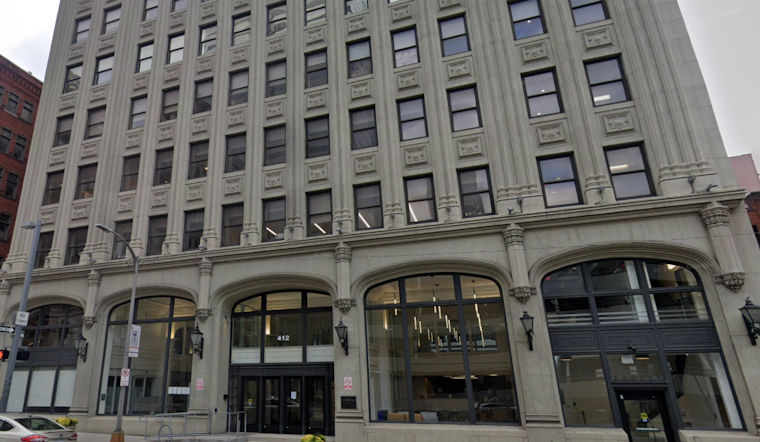
Internal friction over how Pittsburgh funds affordable housing has spilled into court, with Housing Opportunity Fund advisory board member Robert Helwig suing the Urban Redevelopment Authority of Pittsburgh and several of its board members. The suit claims the URA overstepped its authority when it signed off on a change to a $225,000 Housing Opportunity Fund loan tied to four affordable homes in the Hill District, cutting the required affordability period from 40 years to 20 years. The complaint names URA board members Yarone Zober and Sam Williamson, Councilmembers Daniel Lavelle and Bob Charland, State Rep. Lindsay Powell, and the URA itself.
What the lawsuit says
As reported by WESA, the complaint argues that the URA’s five-member governing board “cannot approve funding for any project that has not been first discussed and reviewed by the HOF advisory board.” According to WESA, advisory-board members were later asked to vote on the same loan change after the full URA board had already approved it a month earlier.
The filing, as described in the reporting, asks a judge to sort out a core procedural question: whether the URA’s governing board may act on Housing Opportunity Fund proposals before the advisory board has formally reviewed them.
How the HOF and URA are supposed to work
Per the URA, the Housing Opportunity Fund is a $10 million annual pool that backs programs including down-payment and closing-cost assistance, legal services for renters and homeowners, and a rental-gap loan program for nonprofit developers. The URA’s own description notes that a 17-member advisory board oversees the fund, while the URA Board of Directors serves as the HOF’s governing board.
On paper, that setup is supposed to create a two-step process: the advisory board reviews and recommends, and the URA board makes the final calls.
Recent votes and the local timeline
In mid-May, the URA Board advanced a slate of affordable housing investments, including funding for Bedford Dwellings Phase III in the Hill District, according to a City of Pittsburgh news release about the May 14 board meeting. That same general timeframe, with URA board action followed by advisory-board discussion, is what Helwig’s lawsuit now puts under the microscope.
Advisory-board records
Meeting minutes from the Housing Opportunity Fund advisory board list Robert Helwig as a fair-housing advocate and show that the panel routinely reviews and votes on HOF expenditures and loan recommendations. Those minutes, which are part of the public record, spell out motions and votes on specific program items, underscoring the procedural role the advisory board is expected to play and the procedural dispute that sits at the center of the case.
Legal stakes
The city ordinance that created the Housing Opportunity Fund sets out the roles and procedures for both the advisory and governing boards, including rules tied to affordability periods and oversight of how the fund is allocated. If a court decides the URA operated outside that framework, judges could order procedural fixes, such as requiring the URA to wait for advisory-board review before approving proposals or sending particular approvals back for another look.
Any outcome would be about process rather than a judicial verdict on the policy merits of a specific affordable housing project.
Officials' response and what's next
The URA told WESA it does not comment on pending litigation. Court schedules and detailed filings have not yet been widely posted, and it is not clear when a judge will set any hearings, so the case could take months to move through Pittsburgh’s courts.
Helwig, a fair-housing advocate who serves on the advisory board, has framed the lawsuit as an effort to make sure Housing Opportunity Fund decisions track with the process written into law. Developers, advocates, and city officials are watching closely, since the ruling could shape how quickly smaller affordable-housing loans and tweaks travel from recommendation to final approval across Pittsburgh.



