

























































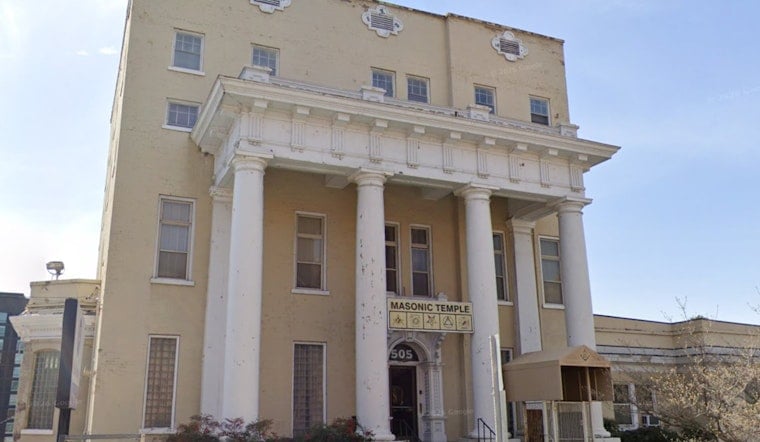
A downtown Knoxville building that quietly carries two different histories — one as the Gilded Age mansion of a railroad tycoon, another as a Masonic meeting place — could be headed for the wrecking ball. The Masonic Temple on Locust Street is now facing potential demolition, putting a conspicuous piece of the city’s historic fabric in the middle of another redevelopment-era showdown.
The possible teardown was reported Thursday by Knoxville News Sentinel, which said the building sits between the YMCA and the red-brick apartments of Kendrick Place. The property has served as a Freemason meeting site since the 1910s, according to the report, and the Masonic Temple is planning to demolish its Locust Street building.
Knoxville history is layered into the building
The structure began as the 1872 home of Charles McClung McGhee, a financier, philanthropist and railroad executive whose business ventures helped shape East Tennessee. The Knox Heritage walking tour identifies the house as one of architect Joseph Baumann’s early Knoxville works.
After McGhee’s death, the Masonic Temple Association hired A.B. Baumann in 1915 to remodel the property into a monumental classical structure. The building’s own Oriental Lodge #453 history says the renovation altered the exterior while preserving many original interior details, leaving the building with a somewhat unusual architectural identity: part Victorian mansion, part Masonic lodge, and part downtown landmark.
What a demolition proposal could trigger
A demolition plan is not necessarily the same thing as an imminent teardown. Under the Knoxville city code, when a demolition application involves a structure listed or eligible for the city’s Historic Structures Inventory and located outside certain local overlay districts, the city cannot issue the permit until a historic preservation planner reviews it.
That review does not automatically save a building, but it can create time for documentation, alternative designs or a preservation deal. Knoxville has seen a similar fight before: Knox Heritage’s Pryor Brown history describes a 60-day demolition delay for that historic downtown garage, along with years of failed efforts to find a workable reuse plan.
Downtown’s redevelopment debate gets another test
The Masonic Temple’s possible loss arrives as Knoxville continues to weigh new construction against the character that makes downtown recognizable in the first place. Recent local coverage has highlighted adaptive reuse of older buildings for offices, clinics and retail, a strategy that can add activity without erasing every older structure in the path of growth.
For now, the key questions are practical as much as sentimental: whether a demolition permit has been filed, what would replace the temple, and whether preservation-minded alternatives are seriously considered. If the building disappears, Knoxville would lose more than a dated façade; it would lose one of the few downtown places where the city’s 19th-century wealth, 20th-century fraternal life and current development pressure all occupy the same address.


