

























































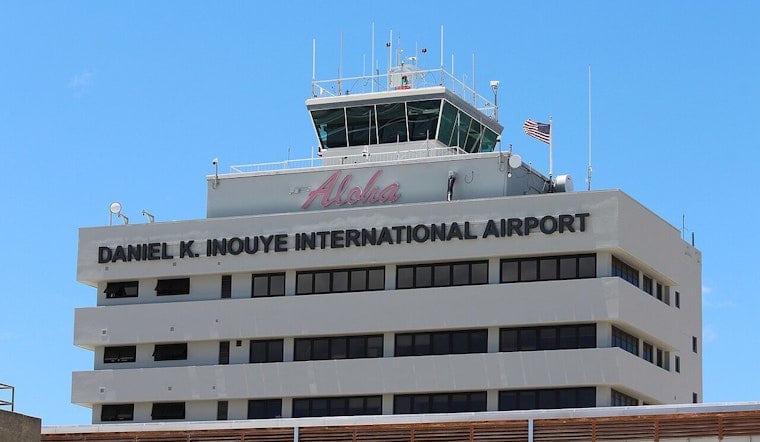
Federal agents at Daniel K. Inouye International Airport in Honolulu say they spotted more than a routine arrival when 51-year-old Chinese national Fanlin Lin stepped off his flight on July 1. Customs and Border Protection officers flagged him for extra screening, and by the end of the day Lin was under arrest on a federal charge of fraud and misuse of visas, permits and other documents tied to what prosecutors say was a key omission on a 2017 B‑1/B‑2 visa application: his prior military service.
Federal complaint lays out what agents say they found
According to the Honolulu Star-Advertiser, Lin drew extra scrutiny from Customs and Border Protection’s Collateral Threat Response Team when he arrived on July 1. A later search of his iPhone allegedly turned up a People’s Liberation Army discharge certificate that listed military service from 1994 through 2011 and a rank of lieutenant colonel. Court records and an affidavit from Homeland Security Investigations state that Lin admitted he attended a PLA military institute and received basic firearms training. His 2017 visa application, however, checked “no” on the question about prior military service and instead listed civilian employers and educational history. Prosecutors responded by charging him with fraud and misuse of visas, and Justice Department filings show they are asking a judge to keep him behind bars while the case moves forward.
Prosecutors highlight PLA background and party status
In court papers, prosecutors say Lin’s alleged false answers on the visa application, combined with the PLA discharge document and his admission that he is an active Chinese Communist Party member with a leadership role in his local party branch, triggered national security concerns. That anxiety sits against a broader backdrop described in the Department of Defense’s 2025 annual report to Congress, which says the PLA has been rapidly modernizing and is working toward the capacity to “fight and win” a war over Taiwan by the end of 2027. Against that kind of timeline, officials say, undisclosed foreign military service is treated as more than a paperwork glitch and can shift what might otherwise be a routine immigration problem into a higher-priority enforcement track.
Court debut and possible penalties
Lin made his first appearance in federal court in Honolulu with the help of a Mandarin interpreter, according to records reviewed by the Star-Advertiser. Assistant U.S. Attorney Mohammad Khatib is handling the prosecution, and the U.S. Attorney’s Office for the District of Hawaii declined to offer further comment to the paper. The charge is brought under the federal visa fraud statute, 18 U.S.C. § 1546, which allows for prison time and financial penalties that vary based on the facts of the case and any links to aggravating conduct such as drug trafficking or terrorism, as outlined in the statute text posted by Cornell Law School.
Hawaii’s growing focus on visa fraud
Federal officials in Hawaii have in recent months put extra muscle behind document fraud and visa fraud cases. Earlier this year, a Honolulu-based Homeland Security task force coordinated raids in several mainland cities aimed at suspected fraudulent Special Immigrant Visa operations, a network investigators said they were trying to dismantle, in what authorities described as multi-city raids in a suspected visa scam. Lin’s arrest now drops into that same broader push, with officials framing these cases as part of a wider effort to shore up the integrity of U.S. travel and immigration documents.
Reporting note: This story draws on federal court records, coverage by the Honolulu Star-Advertiser cited above, and the Department of Defense’s 2025 annual report for background context. As of publication, there was no public press release from the U.S. Attorney’s Office and no formal Customs and Border Protection statement specific to this arrest. The story may be updated if new court filings or official agency statements are released.





