

























































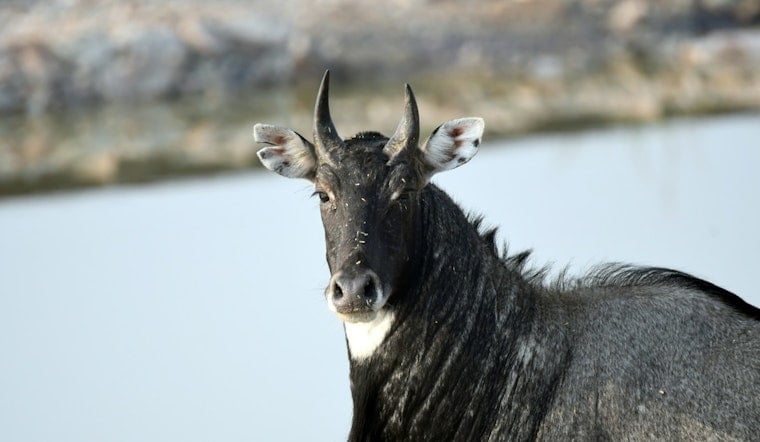
Texas has turned into a kind of live-action safari, with more than 100,000 free-roaming nonnative hoofstock, deer and other exotic mammals fanning out across ranchland, highways and wildlife refuges. From nilgai antelope slipping under fences in the Rio Grande Plains to axis deer grazing along Hill Country roads and aoudad clinging to West Texas canyons, the animals are part roadside spectacle and part management headache. For ranchers, wildlife managers, and local residents, the head count matters, influencing disease control decisions, fence building and who can hunt what on both private and public land.
That sprawling estimate was detailed in reporting published July 7 by the Austin American-Statesman, which pulled together academic work and agency records to figure out how many exotics are loose on the landscape. The Austin American-Statesman notes that the numbers shift by species and by whether animals are kept inside fenced game ranches or truly roam across counties.
Long-running mammal inventories supply the species breakdown behind those totals. In the Natural Science Research Laboratory’s online edition of The Mammals of Texas, authors David Schmidly and Robert Bradley list several exotic ungulates with sizable free-range populations, including nilgai, axis deer, aoudad, fallow deer and sika deer, and they flag that formal statewide surveys have not been conducted in decades. The Mammals of Texas remains the primary species-level reference cited by researchers and reporters.
Those wild herds sit alongside a huge captive animal industry that fuels hunting, tourism, and breeding. Reporting by the Texas Observer describes a game ranching sector with hundreds of operations and millions of animals managed for hunting and private preserves, while conservation centers such as Fossil Rim Wildlife Center run large captive breeding programs for species like cheetahs. The free-ranging exotics and the fenced game herds drive different management problems and very different public reactions.
Who Regulates Exotic Livestock?
Regulation is spread across a patchwork of state and federal agencies. The Texas Animal Health Commission treats many nonnative hoofstock as “exotic livestock” and sets identification, testing and movement rules intended to protect animal health. At the federal level, USDA agencies, including APHIS and its Wildlife Services program, step in on interstate movement, disease responses and control projects such as feral swine operations, and USDA APHIS materials lay out those authorities and operations.
Why The Numbers Matter
Exotic species cut across both ecology and agriculture. Peer-reviewed work shows that nilgai can serve as alternate hosts for cattle fever ticks in South Texas, complicating eradication and quarantine efforts, and feral hogs, estimated at roughly 2.6 million in Texas, cause serious agricultural damage and spread disease. Research available through PubMed Central and state guidance on wild pigs describe how wildlife, livestock, and pests intersect on Texas rangelands, and TPWD maintains information for landowners and the public.
“There are more species and greater numbers of exotic mammals in Texas than in any other place in North America,” a longtime mammalogist told the Austin American-Statesman, a scale that has left managers balancing conservation, commerce and animal health. The Statesman quoted David Schmidly and other experts on the breadth of exotic species in the state.
Officials and researchers say better, up-to-date counts would help target control and conservation work, and the Texas Animal Health Commission has opened rulemaking in recent dockets meant to tighten movement and reporting requirements for some species. TAHC’s proposed rules summarize some of the regulatory changes under consideration.
For now, Texas mix of free-roaming exotics, private game operations, and limited cross-agency tools means surprises on the roadside and in pastures are likely to keep coming. If you encounter a loose or dangerous exotic animal, officials recommend contacting local law enforcement or the Texas Parks and Wildlife Department so trained responders can assess public safety and animal welfare, and TPWD remains a central resource for reporting and guidance.





