

























































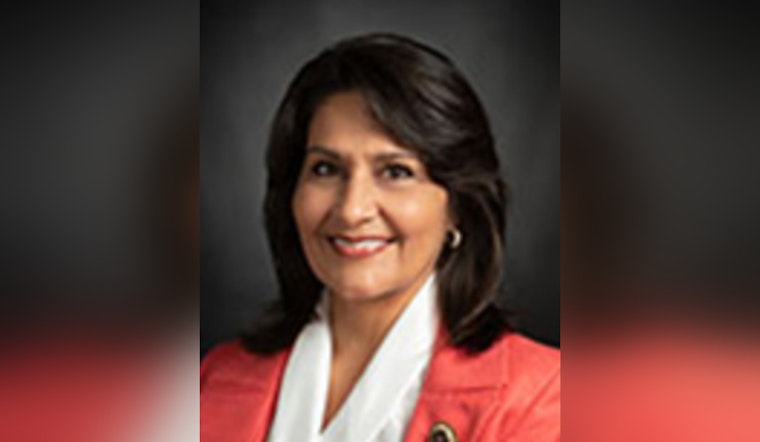
With Texas families sorting through new school-choice accounts and students increasingly encountering artificial intelligence in classrooms, Houston Rep. Penny Morales Shaw is pressing a practical question: who can actually use these programs, and who gets left trying to decode them? At a youth-issues briefing, the District 148 Democrat moved from education funding to AI guardrails and college resources for student parents and immigrant families.
The briefing was held July 10, as the state prepared to move deeper into the first year of its Education Savings Account program. Click2Houston's report said Morales Shaw addressed the Texas Education Freedom Accounts, the impact of AI on children and support systems available to families pursuing higher education.
The Texas Education Freedom Accounts program is now operating for the 2026–27 school year, with the official TEFA portal reporting more than 100,000 students awarded funding. Private-school students can receive $10,474, students with qualifying disabilities may receive up to $30,000, and homeschool students may receive up to $2,000.
The accounts can be used for approved expenses such as private-school tuition, tutoring, transportation and school meals, though families still have to navigate the program’s rules and school availability. The TEFA funding calendar says private-school awards are being distributed in installments, with additional payments scheduled for October 1 and February 1, 2027.
The rollout is landing in a Houston education landscape already under financial pressure. Morales Shaw represents parts of Spring Branch, Garden Oaks/Oak Forest, Carverdale and Cypress-Fairbanks, according to her Texas House biography, while Hoodline reported in June that Spring Branch ISD was facing an estimated $9.6 million reduction tied to a state funding-formula revision.
Texas Is Building The AI Rulebook While Schools Adapt
Texas has already put a statewide framework on the books. The Texas Legislature's summary says House Bill 149, the Texas Responsible Artificial Intelligence Governance Act, took effect January 1 and includes disclosure requirements, restrictions on discriminatory AI uses and a Texas Artificial Intelligence Council that can recommend future policy.
Morales Shaw told Click2Houston that AI is evolving faster than current regulations and that lawmakers are likely to revisit the issue during the upcoming 90th legislative session. She also highlighted “unplugged AI” lessons, in which students learn how the technology works before using AI tools directly.
Student Parents And Immigrant Families Get A Separate Lane
For college students raising children, Morales Shaw pointed to a law she helped author. The Texas Legislature's bill history identifies her as the author of House Bill 1361, which requires public colleges and universities to designate liaison officers for student parents.
Those liaisons are supposed to connect current and incoming student parents with health and behavioral-health services, food assistance, housing resources, child care, transportation, employment help and academic-success support. The law also requires institutions to report information about student parents to the Texas Higher Education Coordinating Board.
For immigrant families, the Texas Education Agency says the Texas Application for State Financial Aid is intended for Texas residents who cannot apply for federal aid through the FAFSA. TEA guidance says students can complete a FAFSA, submit a TASFA or formally opt out to meet the state’s financial-aid application graduation requirement.
The throughline in Morales Shaw’s briefing was less about one sweeping education fix than about making a complicated system usable. For Houston families, that means tracking the new account program, asking harder questions about AI in schools and knowing which campus or state office can help when tuition, child care, housing or paperwork becomes the real obstacle.



