

























































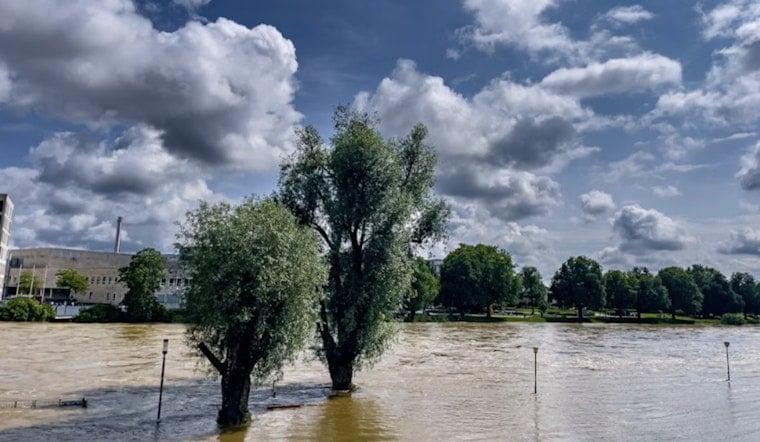
A quiet move in Congress has put Houston's most ambitious flood control idea right back under the spotlight. Tucked into a national water bill is language that would force the U.S. Army Corps of Engineers to finish a long-delayed study on a proposed underground storm-water tunnel running beneath Houston, a multibillion-dollar conduit that would send stormwater from west Houston toward the Gulf.
Backers say a tunnel that size could dull the blow of another Harvey-level disaster. Skeptics counter that the engineering, massive price tag and potential downstream impacts are still very much open questions. The core fight is whether one gigantic pipe can deliver broad protection without creating environmental headaches or financial sticker shock somewhere else.
House Committee Clears WRDA With Tunnel Directive
On July 14 the House Transportation and Infrastructure Committee unanimously advanced the Water Resources Development Act of 2026, which includes provisions to speed Corps reviews of locally driven water projects, the committee said in a release that was later reported by the Houston Chronicle and outlined by the House Transportation & Infrastructure Committee.
Houston-area U.S. Reps. Lizzie Fletcher and Morgan Luttrell successfully added language aimed at prodding the Corps to expedite the Buffalo Bayou and Tributaries Resiliency Study, the sweeping review that includes the tunnel concept. “This project reflects an effort to think big about how to protect our entire community from the cumulative toll of more rain and more storms,” Fletcher said after the measure cleared the panel, as reported by the Houston Chronicle.
Army Corps: More Study, Not Yet A Build Call
The Corps' interim chief’s report, submitted last year as part of the BBTRS process, stopped short of recommending construction and instead called for more detailed design work, additional environmental review and a dam-safety study before any tunnel could be authorized.
In a draft report the Corps concluded that the tunnel alternative would significantly reduce reservoir-induced flooding upstream. At the same time, the agency calculated a preliminary benefit-to-cost ratio of about 0.4, which falls well below typical federal economic benchmarks and raises doubts about whether the tunnel can clear standard funding thresholds, according to a draft report by the U.S. Army Corps of Engineers.
Price Tag And Pushback
The stakes in that analysis are enormous because cost estimates keep climbing. Local reporting has pegged a full-scale tunnel concept at up to $12 billion, a number that has stoked skepticism both inside and outside the Corps.
Corps reviewers and outside engineers argue that such a low benefit-to-cost ratio, combined with thorny environmental and real-estate issues, means Congress should insist on clearer answers before greenlighting construction, the Houston Chronicle found.
Smaller, Cheaper Tunnels Are Being Pitched
While the big-ticket concept dominates the debate, private tunnel ideas have quietly resurfaced. Reporting last year revealed that Rep. Wesley Hunt and Elon Musk’s The Boring Company floated a much smaller, lower-cost tunnel proposal priced at about $760 million. Supporters say that scaled-down version would be easier on taxpayers.
Many engineers, however, warned that a tunnel that small would move far less water and might not offer the level of protection Houston residents expect, according to The Texas Tribune.
What’s Next
Committee passage sends WRDA to the full House, but even if the bill makes it to the president's desk that will not mean crews start digging. Any construction authorization for a flood tunnel still depends on a completed Corps feasibility report, environmental signoffs, federal appropriations and local cost-sharing from the Harris County Flood Control District.
The Corps has recommended finishing feasibility-level work and developing a 35 percent design package to sharpen estimates for cost, benefits and environmental impacts. According to the interim report, that technical grind is where the hardest questions, and the biggest price tags, will ultimately get sorted out.





