

























































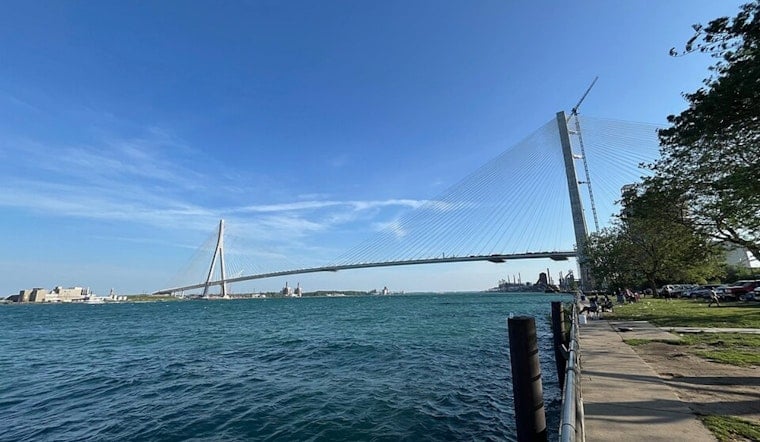
Michigan quietly turned Canada’s big spend on the Gordie Howe International Bridge into roughly $746 million in extra federal highway money, according to state accounting released to reporters and obtained by local media. Ottawa picked up the tab to build the Detroit-Windsor crossing and, through carefully structured arrangements that fit U.S. federal-aid rules, those Canadian expenditures were counted in ways that let Michigan pull in federal reimbursements for related highway work. The timing is touchy, since the bridge is set to open just as a new U.S. Canada agreement on tolls and revenue sharing lands, stirring fresh questions about transparency and who actually pockets the upside.
According to The Detroit News, Michigan Department of Transportation records show the state has “drawn down” about $746 million in federal highway matching payments tied to bridge-related work. The paper reports that the figure comes from MDOT’s federal-aid accounting and reflects reimbursements claimed after Canada financed eligible pieces of the project. Reporters tallied the total after reviewing agency filings and state disclosures.
Canada financed the crossing, with the Windsor-Detroit Bridge Authority listing the project value at about C$6.4 billion, or roughly US$4.7 billion. The 2012 Canada-Michigan Crossing Agreement anticipated that if the project met U.S. federal-aid eligibility requirements, Michigan could receive up to $2.2 billion in matching federal dollars, according to WDBA materials.
MDOT’s own legislative filings show how that played out on paper. The department reported reimbursements from the Windsor-Detroit Bridge Authority along with some Federal Highway Administration payments for Gordie Howe International Bridge-related work, and state law requires MDOT to file monthly status reports listing those items. MDOT’s December 2023 monthly report shows reimbursements from WDBA and a small line item for FHWA Gordie Howe revenue. For auditors and reporters, those monthly statements are the main paper trail behind the $746 million tally.
How the federal match worked
In practical terms, Canada paid to build most of the bridge, but the Crossing Agreement required certain U.S. side components to be set up and documented so they would qualify under federal-aid rules. That allowed Canadian spending to function as the “non-federal” share that unlocks matching reimbursements. The arrangement depended on procurement and paperwork that could be fed into the federal-aid system, as described in Government of Canada briefing materials. Once those eligibility boxes were checked, Michigan could file claims and receive the federal reimbursable share for qualifying highway work tied to the crossing.
Local politics and oversight
The accounting strategy has turned into a political flashpoint. Supporters say Michigan simply used federal programs the way they were designed, while critics argue that turning a foreign government’s investment into a sizable stream of U.S. highway cash deserves a lot more daylight. According to Hoodline, Members of Congress and Michigan lawmakers have already raised questions about the bridge standoff and related meetings, and local representatives earlier demanded transparency in those dealings. For residents and workers along the corridor, though, the concrete impacts of truck traffic patterns, construction work, and neighborhood disruption are far more immediate than the fine print of federal-aid math.
There are also formal oversight levers baked in. Public Act reporting requirements force MDOT to track expenditures and reimbursements connected to the Gordie Howe project, and those filings anchor any future audit or legislative inquiry. MDOT’s monthly GHIB reports are the primary public record and would be the documents lawmakers or federal reviewers reach for if they decide to dig in. Any probe would focus on eligibility documentation and whether federal rules were followed when the state submitted its claims.
For now, the $746 million figure rests on state accounting and recent reporting, and officials in Lansing and Washington will have to decide whether that outcome is simply the technical result of the Crossing Agreement or a policy problem that calls for a fix. The Windsor-Detroit Bridge Authority and the two federal governments have also released a new agreement in principle that affects revenue sharing in the early years, a separate move that helped clear the way for the bridge’s opening this month. Expect more document requests, hearings and public briefings as the region adjusts to a new international crossing and an equally new set of accounting questions.





