

























































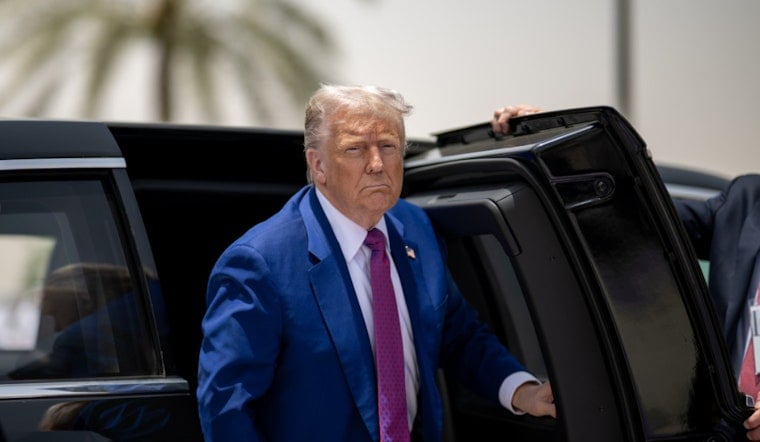
Israeli officials have quietly warned Washington that Iran has plotted a new attempt to assassinate President Donald Trump, according to media reports, dropping a jolt of spy-thriller drama into an already explosive standoff in the Gulf. The alleged plot surfaced just as U.S. and Israeli forces resumed strikes around the Strait of Hormuz and Trump declared the fragile ceasefire with Tehran "over," raising fresh questions about how fast intelligence is moving and how carefully it is being checked.
What officials say
The Wall Street Journal first reported that Israel shared intelligence with the United States alleging a new Iranian plan to target Trump, with those claims later summarized by News 4 San Antonio. According to that coverage, U.S. officials received the warning this week while the Pentagon and allied navies were already running operations to protect commercial shipping in the Strait of Hormuz. Neither outlet published underlying evidence, and U.S. officials have so far declined to declassify operational details, leaving the public with more questions than answers about the strength of the intelligence.
U.S. strikes and ceasefire
The alleged plot landed as the military situation heated back up. The United States launched new strikes on Iranian targets after Tehran attacked commercial vessels near the Strait of Hormuz, and Trump said the two-week ceasefire was "over," according to The Associated Press. The AP reported that U.S. strikes hit military sites and port facilities, and that Iran answered by firing at Gulf Arab states. That return to open-fire exchanges pushed oil prices higher and forced U.S. partners to start gaming out how quickly a contained confrontation could tip into something far bigger.
Trump's reaction and security moves
Speaking to reporters aboard Air Force One as he headed home from the NATO summit, Trump brushed off the personal danger with a mix of bravado and irritation, calling Iran "sort of crazy" and saying he faces threats "all the time" and considers himself "No. 1 on their list," remarks recorded by CBS News. Behind the scenes, the tone was less casual. Officials told local outlets that Trump switched from his newer, Qatari-gifted plane to an older Air Force jet for the trip home as a precaution, a step described as taken "out of an abundance of caution" in News 4 San Antonio. That kind of last-minute aircraft shuffle is a reminder of how quickly threat assessments can upend even the most routine movements of a president in a shooting conflict.
Background: allies, warnings and limits
Washington and Jerusalem routinely swap highly sensitive intelligence, and just as routinely argue about how to use it. Earlier reporting by The Washington Post detailed a striking episode in which U.S. officials warned Iran that Israeli plans to target senior Iranian negotiators could blow up fragile diplomacy. That kind of back-channel caution shows how dueling warnings can complicate decision-making even between close allies. Analysts say the latest claim of an Iranian plot, if it holds up under scrutiny, would further strain coordination and arm hawkish voices arguing for sustained pressure on Tehran.
Why it matters
A charge that an ally tipped off Washington to a plot against the sitting U.S. president is not just another line item in an intelligence brief. It can trigger changes in travel plans, tighten security perimeters, and provide political cover for expanded military operations, all while deepening diplomatic rifts with adversaries and occasionally with friends. For now, U.S. officials are treating the Israeli warning as one data point among many, to be weighed against other classified reporting. Lawmakers who oversee intelligence are expected to demand closed-door briefings as the strikes continue and the administration decides how seriously to treat talk of an Iranian hit squad targeting Trump.



