

























































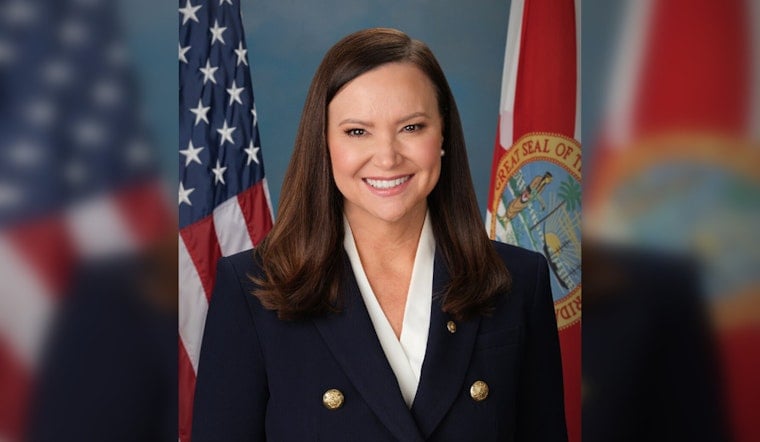
Sen. Ashley Moody is taking aim at crash-for-cash schemes, rolling out a federal bill this week that would make intentionally staging a wreck with a commercial truck a crime under federal law. The proposal targets what she and trucking groups describe as organized rings that deliberately cause collisions to squeeze out insurance settlements. The measure, dubbed the Staged Accident Fraud Prevention Act, would set stiff prison terms for people who cause or arrange crashes with big rigs and for professionals who knowingly join in. Moody is pitching it as both a highway safety move and a bid to clamp down on soaring insurance and litigation costs for trucking companies at a time when federal prosecutors and industry groups are pointing to multi-year fraud investigations and mounting legal exposure.
In a press release from Senator Moody, the senator said the bill is intended to "send a clear message" that anyone who stages or helps stage a crash "will be prosecuted," arguing that federal enforcement tools are needed because the fraud networks frequently operate across state lines. The rollout drew backing from the American Trucking Associations, the Florida Trucking Association and several other freight-industry organizations that are urging Congress to move quickly.
What is in the bill
The proposal tracks a House version and would add a new offense to Title 49, making it a federal crime to intentionally cause a collision with a commercial motor vehicle or to arrange for one to occur. According to the bill text on GovInfo, penalties can reach 20 years in prison, with a mandatory minimum 20-year sentence if a staged crash leads to serious bodily injury or death. The draft also includes language aimed at holding attorneys, medical providers and other alleged co-conspirators criminally responsible when they knowingly take part in a scheme.
Why supporters want a federal statute
Supporters point to federal prosecutions in New Orleans and other cities that uncovered coordinated networks of drivers, spotters, medical clinics and plaintiff-side lawyers accused of engineering staged truck crashes. The U.S. Attorney's Office for the Eastern District of Louisiana has brought a string of cases and secured guilty pleas in an investigation known as "Operation Sideswipe," which prosecutors say involved dozens of intentionally caused wrecks. That track record is being used to argue that a clear, nationwide statute is needed to pursue organizers whose activities do not stop at state borders.
Industry numbers and costs
Trucking groups say these scams are helping push up claim amounts and premiums even as overall crash injury rates move downward. As reported by Action News Jax, Federal Motor Carrier Safety Administration figures show crash injury rates dropped by roughly 15% from 2019 to 2024, while the American Transportation Research Institute has documented sharp increases in truck insurance premiums and a steady rise in litigation. Florida trucking representatives contend that staged wrecks are a real factor behind higher costs for carriers and, ultimately, for consumers.
Legal implications
If the bill becomes law, it would open a new front in criminal enforcement and raise questions about double-jeopardy limits, proof standards and how to separate staged assaults from ordinary negligence. The House version contains a provision that restricts federal prosecution when someone has already been tried in state court for the same conduct, a safeguard that could influence which cases federal prosecutors choose to bring. Defense lawyers and civil-litigation specialists say the precise wording will play a major role in how aggressively federal authorities proceed and in how plaintiffs' attorneys structure their cases.
What to watch next
Moody introduced the Staged Accident Fraud Prevention Act on July 22 and pointed to Representatives Mike Collins and Brandon Gill as the sponsors of the House companion bill. The proposal still has to clear committee hearings and secure floor votes before it can land on the president's desk. Even if it advances, prosecutors would still need to prove coordination, payments and premeditation in each case, which can be a slog outside of large, well-documented rings. Industry advocates say they are gearing up to push for swift passage and for more federal enforcement resources once the law is on the books.
For Jacksonville and other freight hubs in Florida, supporters argue a federal crackdown could make life safer for truck drivers and help rein in legal and insurance costs that ripple into shipping rates. Critics counter that Congress has to write any new crime carefully enough that it does not sweep in routine car crashes or punish legitimate medical and legal work, and both sides say how lawmakers strike that balance will determine how much the measure ultimately changes life on the road.




