

























































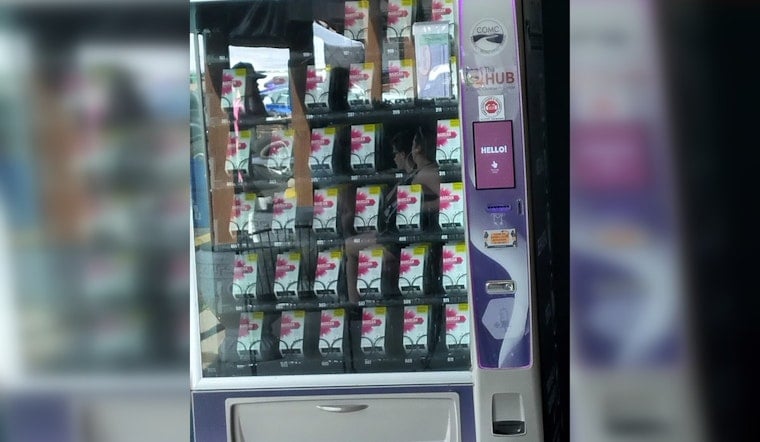
Knoxville’s overdose response is expanding beyond traditional clinics and pharmacies, with free naloxone now available from a public vending machine outside a local recovery center. The setup is designed to remove two stubborn barriers at once: cost and the discomfort of asking for help. Officials say the machine is available around the clock, putting overdose-reversal medication within reach when emergencies do not keep business hours.
The effort follows a 2023 rollout of a naloxone vending machine near the Knox County Jail, where officials said free doses would be available 24 hours a day, according to WBIR. On June 26, the Metro Drug Coalition unveiled another machine outside the Gateway Recovery Community Center, extending the strategy into a community recovery hub.
Gateway machine targets Knoxville’s overdose hot spot
The Gateway machine is located at 530 W. Fifth Avenue and dispenses naloxone at no cost, with no questions asked. The machine holds 200 boxes, each containing two doses, and organizers plan to check its inventory daily, according to WATE.
The location was chosen for more than convenience. Metro Drug Coalition Executive Director Webster Bailey told WATE that most overdoses in Knox County occur in the machine’s ZIP code, making the recovery center’s patio a particularly targeted place to put the medication.
The need remains substantial even as local overdose numbers improve. The Knox County District Attorney General’s Office dashboard showed 132 suspected overdose deaths between January 1 and June 25, 21 fewer than during the same period in 2025, though the figures can change as deaths are reviewed; in 2024, 334 people died from drug overdoses in the county, a 36% decline from the previous year, according to WVLT.
A low-barrier tool for families and bystanders
Naloxone can quickly reverse an opioid overdose, including one involving fentanyl, when it is given in time. The Centers for Disease Control and Prevention encourages people who may be around opioid use to keep the medication available, since a bystander may be the person able to act first.
The machine is intended not only for people who use drugs, but also for relatives, friends, agencies and anyone who wants to be prepared. Tennessee’s Regional Overdose Prevention Specialists provide free overdose-response training and naloxone distribution, while the Metro Drug Coalition lists local overdose-prevention contacts and recovery resources through its community resource page.
Coalition will test whether the pilot can last
The project was funded through a partnership involving Metro Drug Coalition, Reach Impact Institute, Fund Recovery and the Tennessee Department of Mental Health and Substance Abuse Services. WATE reported that organizers have funding for a one-year pilot and will evaluate usage before seeking long-term support.
That evaluation may come down to a simple question: whether people use the machine when they need it. For Knoxville, the answer could determine whether the city’s vending-machine approach becomes a one-off experiment or a larger network of free, around-the-clock overdose protection.





