

























































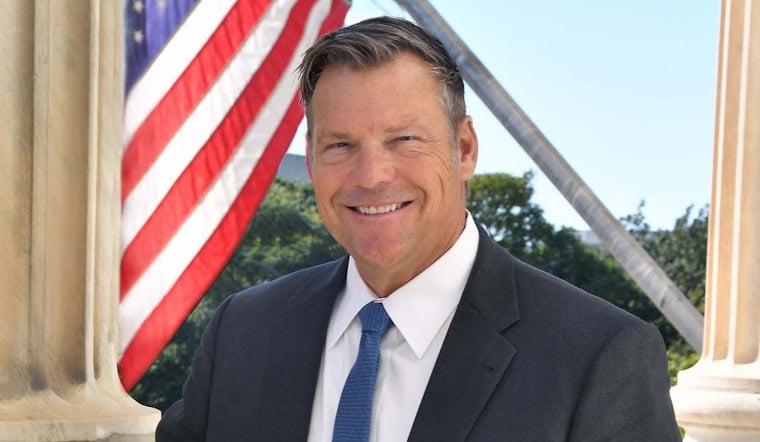
Kansas Attorney General Kris Kobach has given three Kansas cities a stark ultimatum: repeal your local bans on conversion therapy within 60 days or be prepared for a legal fight.
In letters sent Thursday to Lawrence, Roeland Park and Prairie Village, Kobach argued that the ordinances likely violate the U.S. Constitution because they restrict certain types of counseling while allowing others. He framed the local rules as improper attempts to police what can and cannot be said in a therapist’s office, and cited a recent U.S. Supreme Court decision as his legal backbone.
In correspondence first reported by KCTV, Kobach told Lawrence Mayor Brad Finkeldei that the city’s ordinance “seeks to control speech in a nearly identical way” to the Colorado law at issue in that case. He also argued that Lawrence’s broad ban on using the words “conversion therapy” is unconstitutionally vague. Each city was given 60 days to inform the Attorney General’s Office whether it will repeal the ordinance, and the letters were copied to city council members in all three municipalities, according to KCTV. The Attorney General of Kansas's AG Opinions page says, "Our opinions are written to explain the legal issues and the law at the time the opinion is written," indicating the office routinely publishes formal legal opinions that could provide institutional context for Kobach's letters (Attorney General of KS, ag.ks.gov).
The Supreme Court Ruling Kobach Is Leaning On
Kobach is relying on the U.S. Supreme Court’s March 31 decision in Chiles v. Salazar, where the justices held that Colorado’s ban, as applied to a counselor’s talk therapy, regulated speech on the basis of viewpoint and must be reviewed under strict scrutiny. In that opinion, the Court said laws that allow identity affirming counseling while forbidding efforts to change a client’s sexual orientation or gender identity can amount to viewpoint discrimination, a key legal shift highlighted in Kobach’s letters, according to the U.S. Supreme Court.
Medical Groups Warn of Harm
Major medical and mental health organizations have for years described conversion therapy as discredited and potentially harmful, linking the practice to increased rates of depression, self harm and suicide among youth. The American Psychiatric Association issued a statement warning about the consequences of the Court’s decision, according to the American Psychiatric Association. The American Foundation for Suicide Prevention has publicly denounced conversion efforts as dangerous, according to the American Foundation for Suicide Prevention.
Local Options: Repeal, Defend Or Retool
The cities now staring down Kobach’s deadline essentially have three choices: repeal their bans, defend them in court, or try to rewrite the rules to target specific harmful practices rather than therapists’ words. Kansas City, which announced at the end of May that it would repeal its 2019 ban and is drafting a revised measure focused on “therapeutic practices that increase the risk of suicide, self-harm and depression” with fines and possible business license sanctions, offers one model, according to KCTV.
What Comes Next
The three cities have 60 days to tell the Attorney General’s Office whether they will repeal their ordinances. If they refuse, Kobach’s office could pursue enforcement or litigation.
Because the Supreme Court effectively lifted Colorado's ban in Chiles, future legal challenges and ordinance rewrites are likely to be tested under the standard laid out by the U.S. Supreme Court.
At stake is whether cities can craft narrow safeguards that protect youth from harmful practices without triggering the high bar the Court has set for regulations that affect speech. The coming months will show whether Lawrence, Roeland Park and Prairie Village choose to retreat, rework or dig in.





