

























































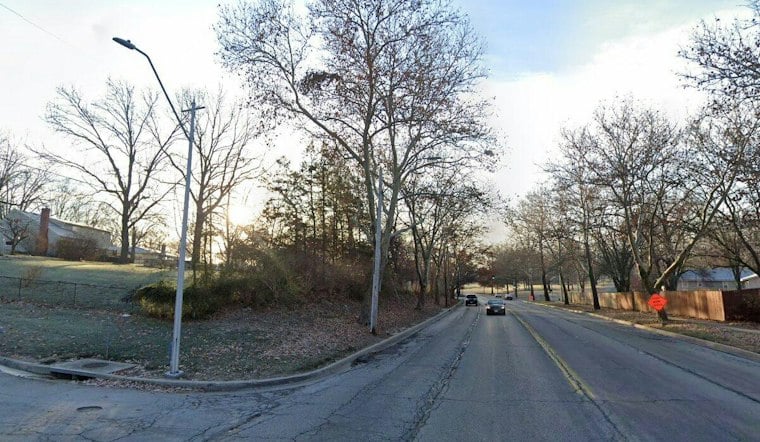
Kansas City police are searching for multiple suspects accused of stealing and vandalizing a pride flag in the city's Northland section, an incident investigators say happened sometime between August 10 and August 14 on the 4600 block of NE Gladstone Avenue. The crime, reported by police, has reignited questions about how local and state hate crime laws might apply when a pride flag is targeted.
According to KMBC, Kansas City police are asking the public for help identifying the people responsible. The outlet, citing police, reports the flag was both stolen and vandalized, though it does not specify a dollar value for the damage. The address falls within the Sherwood Estates neighborhood of Kansas City's Northland section, which sits in Clay County, according to Homes.com.
Anyone with information is asked to contact Kansas City police at 816-413-3459 or the TIPS Hotline at 816-474-TIPS, per the station's report.
How Missouri Law Treats Property Damage Like This
Whether this case ends up charged as a misdemeanor or a felony may come down to dollar figures. Under Missouri criminal law, specifically RSMo § 569.100 and § 569.120, knowingly destroying or damaging someone else's property is charged as second-degree property damage, a Class B misdemeanor, if the damage is under $750 — but it escalates to first-degree property damage, a Class E felony, if the loss exceeds that threshold, according to Rose Legal Services. With the suspects not identified, the case has not reached prosecutors for a charging decision.
Separately, Missouri law allows for sentence enhancements in bias-motivated cases. Under Missouri Revised Statutes Section 557.035, state prosecutors can seek those enhancements for certain charges if they prove the act was knowingly motivated by bias against a victim's sexual orientation, race, color, religion, national origin, sex, or disability, according to the Scrivner Law Firm. It is not yet known whether investigators are pursuing that enhancement in the Gladstone Avenue case.
A City Ordinance Built for Cases Like This
Kansas City has its own layer of enforcement that could come into play. In January 2024, the Kansas City Council passed a local hate crime ordinance that allows municipal prosecutors to seek enhanced penalties — including up to an additional 60 days in jail — for municipal offenses motivated by bias, according to GLAAD.
Legislative records cited by GLAAD show KCPD recorded 24 bias-motivated offenses in 2022 and 23 in 2023, a baseline that helped shape the council's push for tougher local tools. GLAAD also notes that before the ordinance passed, LGBTQ advocates had already pointed to a pattern of property crimes targeting the community, including a pride flag torn down from a City Market storefront and vandalism at a queer-owned business in the West Bottoms.
State and National Numbers Behind the Headlines
The Gladstone Avenue case lands amid a broader statewide and national pattern. Federal hate crime statistics published by the U.S. Department of Justice recorded 205 hate crime incidents in Missouri in 2023, including 31 driven by sexual orientation bias and 11 by gender identity bias. That followed a sharp jump documented earlier: FBI data shows reported hate crime incidents across Missouri rose by nearly 70 percent from 2020 to 2021, climbing from 115 to 194 reported incidents, a change driven in part by state agencies fully transitioning to the National Incident-Based Reporting System.
Nationally, destruction, damage, or vandalism of property ranks among the three most common single-bias hate crime offense types reported to law enforcement, alongside simple assault and intimidation, according to the FBI's Uniform Crime Reporting Program.
Resources Already in Place
Kansas City police already maintain a dedicated LGBTQ Liaison within the department's Community Engagement Division, a resource meant to address public safety concerns and help community members report bias-motivated incidents. It is unclear whether that liaison has been involved in the Northland investigation specifically.
For now, the case remains an active search for suspects, with no arrests announced and no charges filed. The theft and vandalism targeted a pride flag, an LGBTQ+ symbol, raising questions about whether the incident will be treated as a bias-motivated offense under city or state law.





