

























































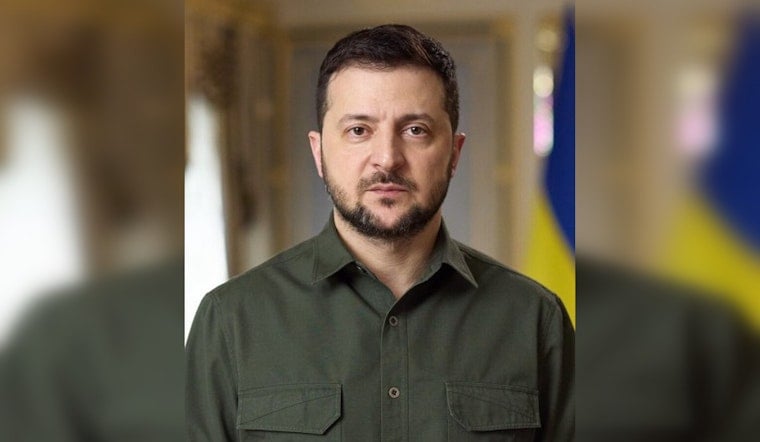
Ukrainian President Volodymyr Zelenskyy is trying to turn polite promises into hard steel. On Thursday in Kyiv, he sat down with a visiting delegation from U.S. defense giant Raytheon and announced that the company is ready to jointly produce Patriot interceptor missiles with Ukraine. The goal is straightforward and urgent: get more interceptors into Ukrainian hands faster, as Russian long-range and ballistic strikes keep stretching allied stockpiles and putting cities under constant threat. The talks are the latest attempt to turn political backing into real industrial output in the middle of a grinding shortage.
According to the presidential press office, the Raytheon team was led by company vice president Joseph DeAntona and came across as “very interested” in teaming up on ground-based air defenses, including interceptors and other non-offensive equipment, Office of the President of Ukraine said. Officials added that technical and legal details will now be hammered out between government and industry experts to figure out specific next steps.
After the meeting, Zelenskyy took to X to say he was “grateful for the company’s readiness to take our partnership to an even higher level,” language picked up by Reuters. He also stressed that “our teams, both at the government level and from the private sector, will stay in close touch to work it out,” signaling that Kyiv wants the co-production track to move from handshake talk to factory-floor reality as quickly as possible.
Technical and timeline hurdles
There is a big catch: none of this happens overnight. Ukrainian officials and outside analysts alike have been warning that you cannot simply snap your fingers and stand up a Patriot production line. The system is highly complex, packed with specialized components and supported by a sprawling supplier network. Ramping up serious production capacity “takes years,” as The Guardian has noted. In practical terms, any Patriot co-production on Ukrainian soil is a medium to long-term hedge, not a quick fix for this month’s missile barrages.
Why allies are watching
The Raytheon talks are unfolding in the shadow of fresh political promises. Earlier this month, U.S. President Donald Trump said he would grant Ukraine a license to manufacture Patriot interceptors, a pledge reported by CBS News. At the same time, Raytheon, an RTX business, has been quietly widening its own production footprint in Europe. The company has announced a multibillion-dollar contract and new GEM-T interceptor production capacity in Germany aimed at refilling global stocks, Raytheon said. These moves matter because allied interceptor inventories have been running hot during high-intensity conflicts and take a long time to rebuild.
Zelenskyy has been framing the Kyiv meeting as part of a broader push to convert political assurances into industrial reality and said teams from government and industry will keep grinding through the details, the San Francisco Chronicle (AP) reported. Hoodline previously covered his campaign for faster Patriot deliveries in May, when Kyiv was again under heavy fire. For now, military analysts say co-production remains a valuable long-term goal, but it will not plug Ukraine’s immediate air-defense gap in the short term.





.jpg)