

























































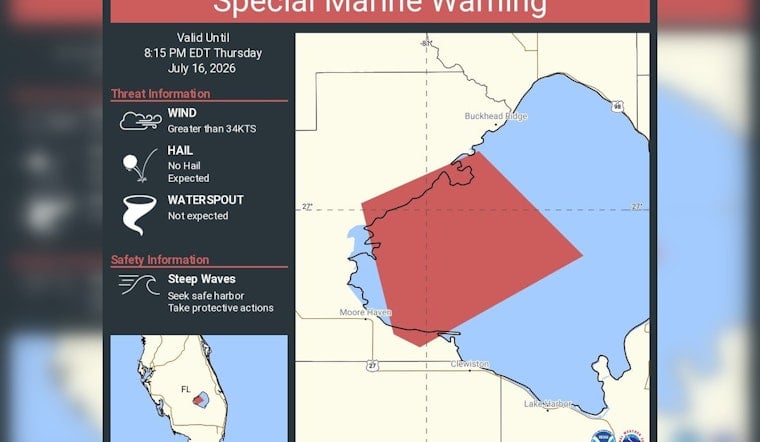
Lake Okeechobee emptied out in a hurry Thursday evening as a Special Marine Warning from the National Weather Service in Miami sent boaters scrambling for safety while fast-moving thunderstorms rolled over the shallow lake. The short-fuse alert flagged sudden, dangerous wind gusts and rapidly building waves that can swamp or capsize small craft, with lakeside communities from Buckhead Ridge to Moore Haven, Clewiston and Lake Harbor all named in the advisory.
According to NWS Miami, the Special Marine Warning for Lake Okeechobee was in effect until 8:15 p.m. EDT and called out wind gusts greater than 34 knots. The agency’s post included a map highlighting Buckhead Ridge, Moore Haven, Clewiston and Lake Harbor in the danger zone and urged mariners to seek safe harbor immediately. Boaters were also asked to report hazardous conditions to the Coast Guard or the NWS when they could do so safely.
What the alert covered
The NWS issues these marine products for short-lived but serious storm threats, including radar-indicated cells capable of producing gusts of 34 knots or more, steep waves and sometimes small hail or waterspouts. Those conditions can turn Lake Okeechobee into a very rough ride for small boats in a matter of minutes. Past Special Marine Warnings for the lake have listed nearby points and marinas and directed boaters to head for protected harbor until the danger passes, according to National Weather Service guidance.
Why the lake turns dangerous fast
Lake Okeechobee is broad, shallow and has a long fetch, so strong gusts can whip up steep, choppy waves in minutes. That setup is highlighted in University of Florida IFAS research and USGS studies on wind and wave effects in the lake. Because the water is shallow, wind energy is pushed through the entire water column, resuspending sediment and quickly worsening sea conditions for small craft.
How to stay safe
If you are on the lake when a Special Marine Warning is issued, get to protected harbor or a safe shoreline immediately, put on a life jacket and secure loose gear. NOAA READY and NWS products recommend staying below deck during lightning and reporting dangerous conditions to the Coast Guard or local authorities when possible. Only head back out after the official warning has expired and new updates show conditions have settled down. In the meantime, keep an ear on marine-band radio and follow NWS Miami’s feeds for the latest.
Special Marine Warnings are brief but urgent. They may last an hour or less, yet they signal immediate danger for anyone on the water, so officials say to keep checking official NWS products through the night before returning to the lake.





