

























































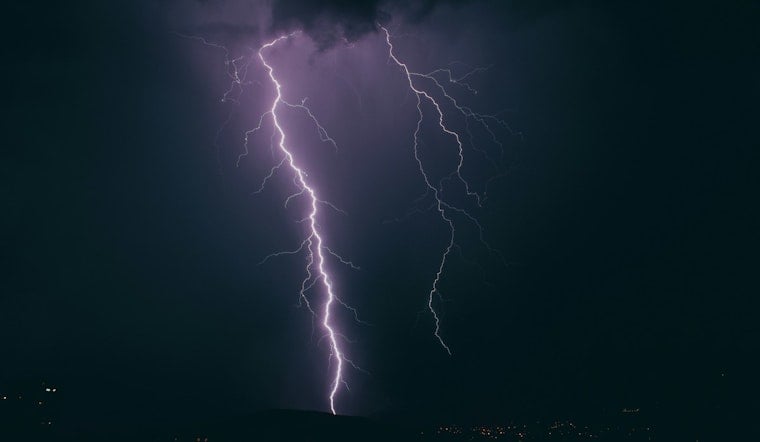
North Carolina’s severe thunderstorm watch stretched into the early hours of Wednesday, running until 1 a.m. and putting Raleigh, Durham and a wide swath of central North Carolina on alert for lightning, gusty winds and sudden downpours. The watch has now expired, but the safety takeaways from a noisy night are worth keeping in mind any time summer storms start to rumble.
According to the Raleigh News & Observer, the National Weather Service office in Raleigh issued the watch Tuesday for Anson, Chatham, Cumberland, Durham, Edgecombe, Franklin, Granville, Harnett, Hoke, Johnston, Lee, Montgomery, Moore, Nash, Orange, Richmond, Sampson, Scotland, Wake, Wayne and Wilson counties. The alert was scheduled to remain in effect through 1 a.m. Wednesday.
A severe thunderstorm watch is essentially a heads-up that the atmosphere is primed for dangerous storms, not a promise that every neighborhood will get hammered. The National Weather Service’s preparedness guidance advises residents to stay tuned for updates and be ready to head indoors quickly if a warning is issued.
Lightning Remains The Biggest Reason To Head Inside
Lightning is not just dramatic storm scenery. The National Weather Service says it strikes the United States about 25 million times a year and kills about 20 people annually. Its basic safety rule is straightforward: when thunder roars, go indoors, and wait at least 30 minutes after the last rumble before going back outside, according to the National Weather Service.
Drivers face their own set of problems when heavy rain ponds on the roads. The Federal Highway Administration notes that hydroplaning risk depends on factors such as water depth, vehicle speed and tire condition, which is why slowing down and leaving extra stopping distance still matters even after the worst of the storm seems to have passed.
For the latest watches and warnings around the Triangle, residents can check the National Weather Service Raleigh before heading outside. A watch may expire quietly, but a new warning can still pop up if storms intensify or shift into a different part of the region.



