

























































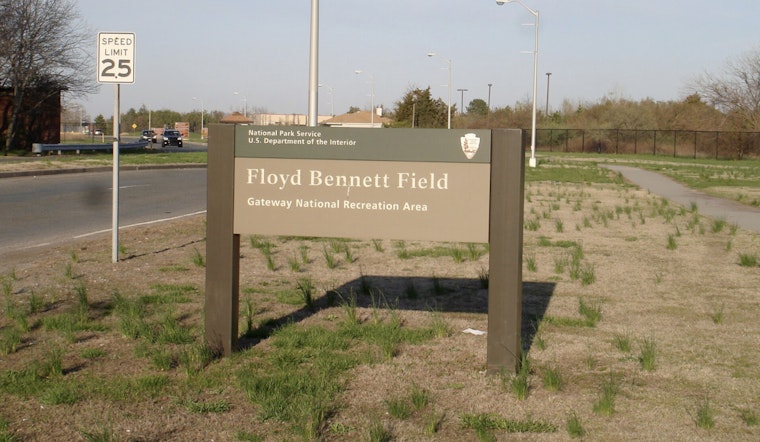
Newly disclosed internal emails published Monday allege that the sprawling migrant encampment at Floyd Bennett Field in southeast Brooklyn slid into a "dumping ground" and created serious fire hazards while roughly 2,000 people were living there. The messages describe cramped conditions, daily operational headaches and safety worries, adding fresh detail to a fight that has already drawn in neighbors, city officials and federal lawmakers. For locals who never loved the idea of tents on federal parkland, the documents rekindle long-standing arguments over using a national recreation area as emergency shelter.
As reported by the New York Post, one of the newly surfaced messages is a Jan. 9, 2024 email from Gateway superintendent Jen Nersesian, who wrote that the camp "appeared clean and well-run albeit in cramped, bare-bones living conditions." The Post also reports that FDNY officials separately warned that hydrants near the remote airfield site were unreliable and that setting up a positive water source could take about 30 minutes, citing internal correspondence. That account frames the clash not only as political theater but as a series of practical red flags that officials were already trading behind the scenes.
Safety concerns flagged early
Fire-safety concerns had been on the record months earlier at City Council hearings, where FDNY representatives and other agencies detailed the challenges of providing water and evacuation support on the former airfield, according to the City Council transcript. Local coverage when the site opened also pointed to the lack of nearby hydrants. CBS New York reported that the closest working hydrant sat roughly 3,000 feet from the relief center, a distance that could slow any emergency response.
How the site was authorized
The National Park Service ultimately agreed to lease part of Floyd Bennett Field to New York City for emergency shelter operations, with the lease starting on Sept. 15, 2023, a date recorded in congressional documents. Lawmakers and committee records describe a months-long series of talks among city, state and federal officials as leaders scrambled to find large, quickly available space to house new arrivals and manage a surge in asylum seekers.
Closure and local fallout
The tent complex has since been dismantled, and the last of the roughly 2,000 residents were moved off the field. The Associated Press reported that crews shuttered the encampment in early 2025. Hoodline previously covered the planned shutdown and the neighborhood fight over what, exactly, should replace a federal emergency shelter on national parkland. Volunteers, legal advocates and nearby residents say the newly public emails highlight what they see as ongoing gaps in oversight and emergency planning at the site.
Oversight and what comes next
Republican-led congressional inquiries and proposed legislation have already zeroed in on the lease and on turning national parkland into temporary housing, and the latest batch of correspondence could feed new rounds of oversight or policy efforts, according to public committee records. Federal and local officials have repeatedly been pressed in hearings on why park acreage was picked in the first place and what safety and management safeguards were supposed to be in place.
Floyd Bennett Field sits within the Gateway National Recreation Area and is managed by the National Park Service, which is tasked with balancing park stewardship against emergency-response responsibilities, as the agency notes on its own site. For neighbors, park users and former residents of the encampment, the emails serve as a reminder that high-level decisions about where to put emergency housing can land very directly on questions of local safety, livability and recreation.





.jpg)