

























































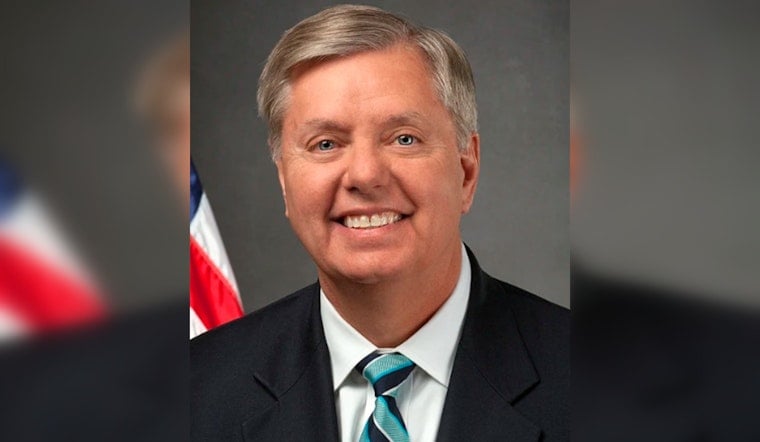
Sen. Lindsey Graham, the longtime Republican senator from South Carolina, died at 71 on the evening of Saturday, July 11 after what his office called "a brief and sudden illness." Outside his Capitol Hill residence, photographs and emergency radio traffic captured paramedics rushing a person into an ambulance, leaving colleagues and staff in Washington stunned late into the night.
His office confirmed the death early Sunday, repeating that the illness had been brief and sudden but offering no additional specifics. Photographs reviewed by reporters, along with police scanner audio, indicated emergency crews had been dispatched to a reported cardiac arrest at his home. NBC News also noted that Graham had been slated to appear on "Meet the Press" later that morning.
Back From Kyiv
Just days before his death, Graham had been overseas. He traveled to Europe last week and met with Ukrainian President Volodymyr Zelenskyy in Kyiv on July 10, according to the Office of the President of Ukraine.
While in the region, his Senate office said Graham and a bipartisan group of senators reached agreement with the White House on updated Russia sanctions, a development detailed in a July 10 press release from Graham's Senate office.
Career And The 2026 Campaign
Graham was first elected to the United States Senate in 2002 and took office in 2003. He most recently served as chairman of the Senate Budget Committee, according to Graham's Senate office.
That biography notes that Graham "has earned a reputation as a conservative problem-solver." He had been seeking a fifth six-year Senate term this November, as previously reported by NBC News.
What Comes Next
Graham's office did not release details about the precise medical cause of death, beyond describing the illness as brief and sudden in its short written statement.
Officials in South Carolina, along with Senate leadership in Washington, were expected to release formal statements and outline next steps following Graham's death in the hours ahead.





.jpg)