

























































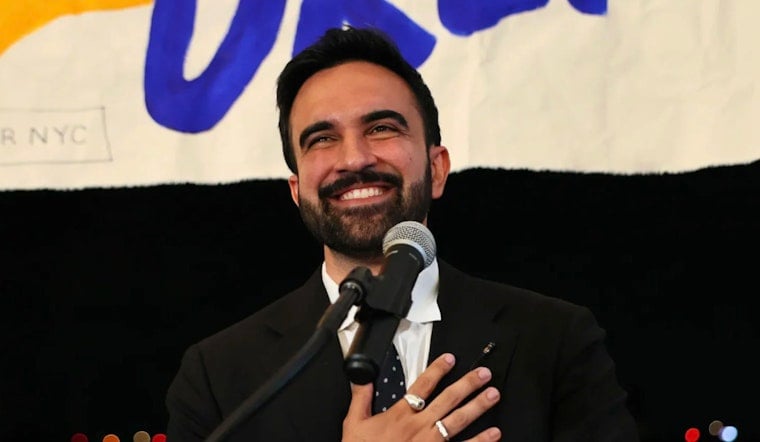
At a Thursday press conference on the Lower East Side, Mayor Zohran Mamdani made a move that could reshape his next race: he announced he will opt out of New York City's campaign matching funds program for his 2029 re‑election bid. The declaration came as his campaign filed its first re‑election finance report and marked a sharp break from the small‑donor strategy that helped carry him in 2025, setting up a clash over whether his next run leans on grassroots giving or bigger checks and outside spending.
Mamdani's latest filing shows his campaign pulled in about $304,000 from nearly 6,000 donors during his first six months in office, with a noticeable number of larger contributions that would not be allowed for candidates who accept public matching dollars. Campaign manager Celia Castellan told City & State that the mayor does not plan to participate in the city's matching program, and that outlet also flagged 33 donations over the $2,500 limit that applies to candidates who do.
How The City's Matching Program Works
New York City's public matching system multiplies qualifying contributions from city residents at an 8‑to‑1 rate and imposes an approximate $8 million spending cap in the primary for participating citywide campaigns, according to the New York City Campaign Finance Board. Only the first $250 of a city resident's donation is eligible for matching in citywide races, and the board reviews and verifies claims before any public payments are released.
Pressure From Outside Spending
By opting out, Mamdani frees himself from the spending cap, but he also opens the door wider to the world of independent spending that has increasingly defined New York City politics. Outside groups poured tens of millions of dollars into the 2025 mayoral contest, and the pro‑Cuomo super PAC Fix the City alone spent more than $16 million in that cycle, a surge that rattled challengers and watchdogs, as reported by NY1. Independent‑expenditure committees can take in unlimited contributions as long as they do not coordinate with campaigns, the FEC notes.
At the Lower East Side event, Mamdani declined to say whether he would turn down help from super PACs, leaving the door open for independent spending on his behalf in the next race, according to the New York Daily News. The current blend of small donors and larger contributions from outside the city will go a long way in determining whether his operation leans more on grassroots field work or relies heavily on an air war funded by outside advertising.
What This Could Mean For 2029
The move gives Mamdani more freedom to accept larger donations and benefit from independent ads, while also sidestepping the paperwork and limits that come with the matching program. It also risks weakening the small‑donor focus that powered his 2025 victory and virtually guarantees that his money strategy will be a prime target for watchdogs and critics as the 2029 campaign season takes shape, according to public filings and reporting.
Legal And Compliance Notes
The Campaign Finance Board can treat coordinated independent spending as an in‑kind contribution and reduce matching funds or impose penalties if it finds that a campaign and an outside group worked together, a point that watchdog reporting underscored in the 2025 cycle. Campaigns that sit out the matching system avoid the board's spending cap but still have to comply with state and federal rules on coordination, disclosure, and prohibited sources, so legal scrutiny is likely to follow Mamdani's decision even without the extra layer of public‑funds oversight.





