

























































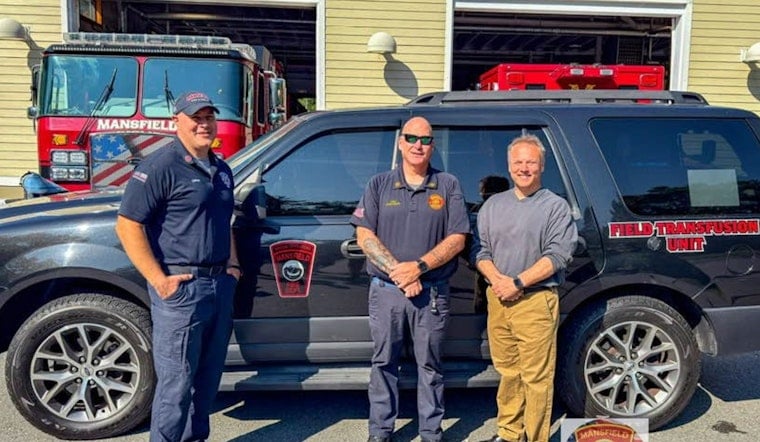
On Friday, July 17, 2026, the Mansfield Fire Department pulled the cover off a specially equipped mobile whole-blood transfusion truck that will let first responders start life-saving transfusions before patients ever see a hospital room. The new unit is set up to carry refrigerated low-titer whole blood along with warming and transfusion equipment so crews can stabilize people with severe bleeding during transport. Fire officials at the unveiling called the vehicle a major leap forward for Mansfield's prehospital trauma care.
"When it comes to trauma patients, the number one thing you can give at point of injury is blood," Deputy Chief Gary Reagan said at the ceremony. According to 7News WHDH, Mansfield is the first department in Bristol County to receive this kind of truck and one of just three in Massachusetts outfitted with the capability.
How the unit will be used
The vehicle serves as a mobile whole-blood transfusion unit that will roll to traumatic incidents with trained personnel and the tools to warm and transfuse blood in the field, or to meet up with an ambulance that is already en route. According to a special-project waiver application filed with the Petrie-Flom Center at Harvard Law School, that setup creates a "survival bridge" between the scene and the trauma center by allowing transfusions to start earlier than they otherwise could. Departments in the regional pilot keep small, temperature-controlled supplies of whole blood ready to move quickly wherever they are needed.
Built on a regional pilot
Mansfield's truck grows out of a pilot program launched out of Canton in partnership with Boston Medical Center that first brought prehospital whole-blood transfusions to area ambulances and field teams. Coverage of the Canton program describes teams training alongside BMC trauma staff, using satellite blood storage and following a protocol that lets them intercept ambulances so transfusions can begin during transport, steps local officials say they are now adapting for neighboring communities. The Massachusetts Municipal Association has detailed how that pilot was organized and funded.
Why minutes matter
Clinicians say that when a patient is suffering massive hemorrhage, every minute counts, which is why departments are pushing blood into the earliest links of the emergency care chain. A cohort analysis published in JAMA Network Open documented growing use of whole blood in the field and associations between earlier transfusion and better early outcomes for bleeding trauma patients. Local and regional partners say that evidence, combined with hands-on training, underlies the move to put a mobile transfusion capability in Mansfield.
Funding and early results
Mansfield officials told reporters the truck was acquired with help from a grant backed by local politicians, and Medical Director Michael Valkanas said crews tied to the program have responded about 125 times and given transfusions to 42 patients so far. 7News WHDH reported those figures at the unveiling and quoted department leaders on the unit's expected life-saving impact.
Town and regional leaders say the priorities now are maintaining reliable blood supply chains, continuing paramedic training and staying tightly coordinated with area trauma centers so whole-blood transfusion can be used safely and more widely. Advocates concede there are logistical headaches, including refrigeration, managing expiration dates and ensuring clinical oversight, but they argue the payoff is faster, more effective care when there is simply no time to waste.



