

























































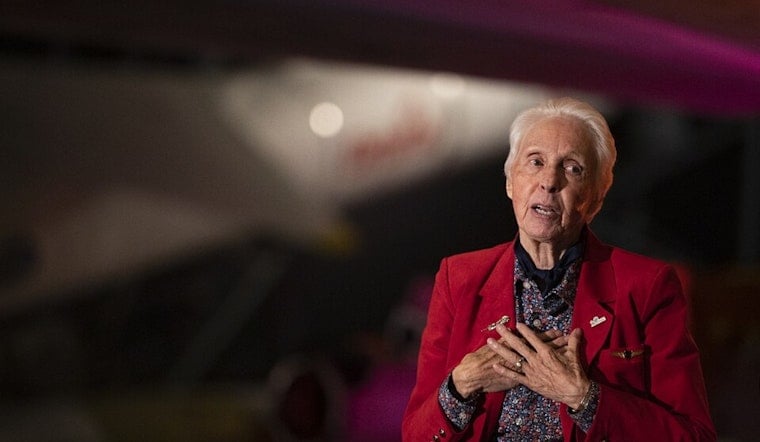
Wally Funk, the Grapevine aviation powerhouse who trained with the Mercury 13 and finally reached the edge of space on a Blue Origin rocket, has died at 87. The city of Grapevine confirmed her passing today, closing the book on a career that stretched from the early days of astronaut testing to the dawn of commercial spaceflight.
The city’s confirmation of Funk’s death was reported by NBC DFW, which noted that Grapevine had previously celebrated her 2021 Blue Origin flight with proclamations and public honors. Officials have not released a cause of death or details about services.
From Mercury 13 Hopeful to Classroom Legend
Funk volunteered for William Randolph Lovelace’s Women in Space tests and was the youngest member of the group later known as the Mercury 13, according to the NASA History Office. She never joined NASA’s astronaut corps in the 1960s, but she built a long and stubbornly hands-on career in aviation instead, serving as a civilian flight instructor at Fort Sill, working with the FAA and the NTSB, and mentoring generations of pilots.
The Ninety-Nines, the organization of women pilots, notes that Funk logged more than 19,600 flight hours and trained roughly 3,000 students over the course of her career. For a lot of North Texas aviators, her name showed up first in a logbook and only later in the history books.
Blue Origin Breakthrough and Hometown Pride
About sixty years after those early spaceflight tests, Funk finally got her ride to the edge of space on Blue Origin’s first crewed New Shepard mission in July 2021, a launch covered by outlets including Space.com. Grapevine residents turned the moment into a civic celebration, with watch parties and praise from local leaders. The city’s mayor called her a “true trailblazer,” as reported by The Dallas Morning News, as Funk briefly became the hometown hero who finally got the flight she had been promised decades earlier.
Her journey from Mercury 13 test subject to paying passenger in the commercial space age has been chronicled by outlets such as Time and the Washington Post. The Ninety-Nines notes that Funk was a member for six decades and that her work as an instructor and investigator left a lasting imprint on regional aviation communities. Pilots and former students publicly recalled her persistence and straightforward teaching style during her big public milestones, proof that her influence in the cockpit rivaled her fame on launch day.
The city and Funk’s family have not released further information about services or the cause of death, NBC DFW reports, and officials have asked for privacy as the community absorbs the loss. Her passing marks the end of a remarkable life that linked the first, often closed, doors of astronaut testing with a new era of private space travel that finally let her through.





.jpg)