

























































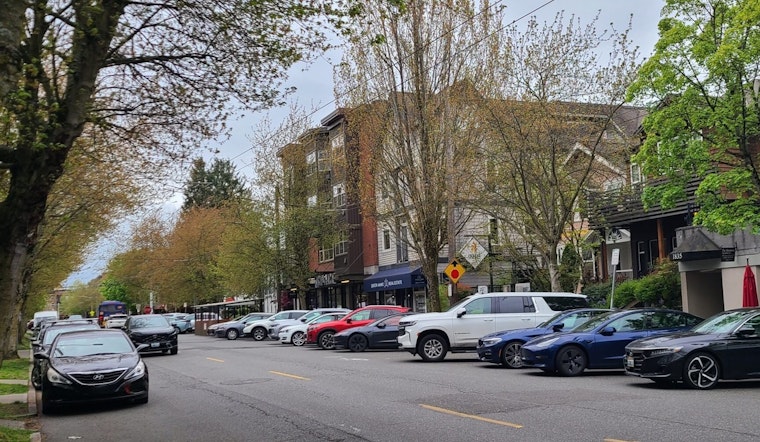
Paid street parking could be creeping back into the West Seattle Junction, and the city wants to hear from everyone who circles the block looking for a spot. Seattle’s Department of Transportation has reopened its review of curbspace in the Junction and says fresh block-by-block counts show many on-street spaces are often full. In response, the agency is launching another round of outreach this summer, with separate surveys for residents, businesses and visitors open through July 27 as it prepares draft recommendations for the fall.
What SDOT Is Studying
According to SDOT, its Community Access and Parking Program has been gathering occupancy counts and intercept surveys to gauge how curbspace is actually being used. The agency is weighing tools such as new time limits, additional load zones and a return of paid parking in order to boost turnover and make it easier for shoppers and delivery drivers to find short-term spaces.
The city maps the review area as California Ave SW from SW Edmunds St to SW Dakota St, and SW Alaska St from Fauntleroy Way SW to Glenn Way SW. SDOT notes that work in this corridor is part of a 2026 review that will feed into draft recommendations planned for this fall, so the parking conversation is not going away anytime soon.
Local Reaction Likely To Be Split
Neighbors have been through this argument before, and it is almost guaranteed to get loud again. Local reporting suggests the latest review will revive a familiar Junction debate over meters versus free parking. As West Seattle Blog reports, SDOT plans to staff information booths at the West Seattle Art Walk, Summer Fest and the neighborhood farmers markets to answer questions and collect feedback, and the agency is again offering separate surveys for businesses, residents and visitors.
Many merchants and longtime residents pushed back when the city previously floated adding meters in the Junction, and there is no sign those feelings have vanished. Some locals worry that charging for curbside parking would scare off customers, while others argue that paid parking is the only realistic way to free up spaces and keep visits short. Expect a summer full of opinions about whose convenience counts most.
Context: Private Lots And Residential Permit Zones
The Junction’s broader parking scene has already shifted in recent years. The once-free privately owned lots tucked behind many storefronts started charging in the early 2020s, a change reported in 2021 by SeattlePI. Drivers who had long treated those lots as their go-to option suddenly had to feed a kiosk or risk a ticket.
City documents also show that after earlier parking studies, SDOT created a residential permit zone in nearby blocks and tweaked curb rules, but key block faces in the core business district still see consistently high occupancy. That history helps explain why opinions are so divided: some business owners remain convinced meters would be bad for sales, while others believe paid street parking would churn spaces more quickly and make those quick coffee runs or pick-ups less of a hunt.
How To Weigh In
SDOT is asking anyone who parks in or around the Junction to fill out one of its three online surveys - one each for visitors, businesses and residents - by July 27. Links to the questionnaires and more background are posted in the agency’s announcement from SDOT.
After the survey period closes, SDOT says it will combine what it hears from the community with the parking data it has collected, then return to the neighborhood this fall with draft recommendations for additional feedback. For anyone who prefers talking things through in person, the agency plans to station representatives at Junction events this summer to field questions and gather comments.
Whatever option the city lands on could reshape how the Junction manages curbspace for customers, residents and delivery trucks, and it will ultimately hinge on how the neighborhood weighs convenience, turnover and business needs. For now, the future of street parking in the West Seattle Junction is very much up for debate, and SDOT is asking locals to speak up before it brings specific proposals back later this year.





