

























































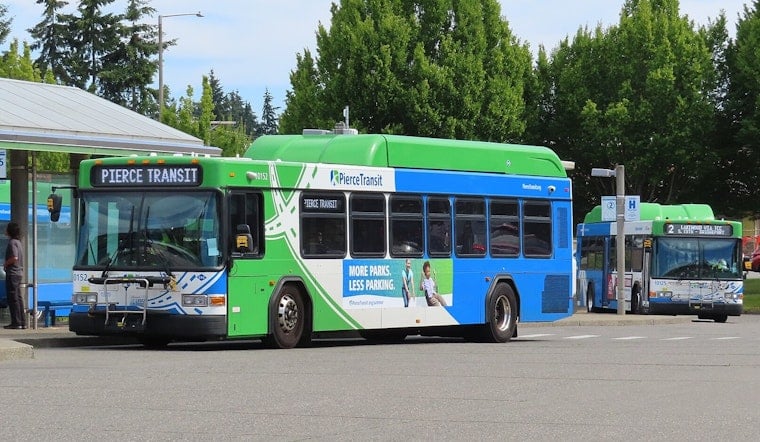
Pierce Transit riders 65 and older could soon board buses and Shuttle paratransit vehicles for free, under a ballot measure that Pierce County voters will decide on November 3. The proposal, which also aims to expand overall bus service by roughly 40%, would raise the agency's sales tax rate from 0.6% to 0.9% — the maximum allowed under state law.
The Pierce Transit Board of Commissioners unanimously passed Resolution 2026-006 on July 13, formally placing the 0.3% sales tax increase on the November ballot, according to KIRO 7. In a post on X, Pierce Transit framed the vote simply: more people, more places, more often — or not, depending on how residents cast their ballots. The agency describes itself as leading the South Sound in safe and sustainable public transportation, serving communities across Pierce County, Washington.
If approved, the tax increase is projected to generate more than $60 million in additional annual revenue, expanding total system service hours by an estimated 40% to 47% by the mid-2030s, per the same KIRO 7 report. Local sales taxes currently make up roughly 80% of Pierce Transit's operating revenue, and the agency's rate has sat at 0.6% since 2002 — lower than King County Metro's 0.9%, Spokane Transit's 0.8%, and Snohomish County's Community Transit at 1.2%, according to The Urbanist.
A Rate Capped by State Law
Washington State law, under RCW 82.14.045, caps Public Transportation Benefit Areas at a maximum sales and use tax rate of 0.9% for transit operations — meaning this measure would push Pierce Transit to the full ceiling allowed statewide. Snohomish County's Community Transit was granted special legislative authorization back in 2015 to exceed that limit, the same law notes.
The stakes go beyond expansion wishlists. Pierce Transit's six-year financial plan shows agency costs are expected to exceed annual revenues starting in 2027, with reserve funds projected to run dry within six years — potentially forcing service cuts by 2031 if voters reject new revenue, the outlet's report states.
A Narrow Defeat Still Looms Large
This marks Pierce Transit's first funding request to voters since November 2012, when a similar 0.3% sales tax proposal failed by just 704 votes out of more than 201,000 cast. That defeat originally forced the agency to plan a 28% cut to annual service hours, a history that looms over this fall's campaign as the agency tries to avoid a repeat.
The senior fare proposal would build on an existing state program: under the 2022 Move Ahead Washington transportation package, Pierce Transit already receives about $8.3 million annually in state grant funding to provide free rides for youth ages 18 and under. Riders like Dineo M., who takes two buses to Bates Technical College, already benefit from a free ORCA pass tied to that youth program — a contrast to what seniors currently pay to ride.
New Routes, Later Nights
The expansion plan calls for four brand-new routes serving the Port of Tacoma, East Tacoma, Northeast Tacoma, and Puyallup, along with extending service until at least 10 p.m. on most routes during weekdays and Saturdays. The plan also includes two upgrades within the Stream bus rapid transit corridor, rounding out a package the agency says was shaped by community input, data, and long-range planning.
Everyday necessities won't feel the tax bump. Groceries that are already unadjusted for sales tax, residential rent or mortgages, and most healthcare services remain exempt under Washington law, while taxable items like restaurant meals, electronics, and clothing would see an extra 3 cents per $10 spent.
Riders Describe What the Buses Already Mean to Them
For some current riders, the case for expansion is personal. Linda has said the Shuttle paratransit service became her primary form of transportation, while Diana has said her household saves about $50 each time she skips filling up her car by riding transit instead. Pierce Transit's Shuttle is an ADA paratransit shared-ride service for people unable to use a regular bus because of a disability.
The agency's broader reach already shows up in its numbers: 6,952,235 bus rides, 248,687 Shuttle rides, and 373,907 rideshare trips that Pierce Transit says have helped take vehicles off the road and reduce congestion. The agency also delivered 126,804 tickets through its HSA pass program and 21,069 discounted passes and ORCA cards to Bates Technical College students, alongside free travel training for seniors and people with disabilities that reached 108 customers through 352 bus trips.
Recent Disruptions Underscore the Network's Reach
The system's regional footprint was on display recently when an over-height vehicle struck a bridge on August 18 near Enumclaw and Buckley, causing significant travel disruptions. Pierce Transit responded with 27 days of emergency Buckley Connector service, a temporary shuttle meant to preserve access to jobs, schools, healthcare, and everyday necessities for residents in the affected area.
The vote follows a stretch of visible investment for the agency, including the new Spanaway Transit Center that opened as part of a record ridership year, when Pierce Transit logged 7,039,888 total boardings with an 84% on-time performance rate.
Where to Learn More Before November
Pierce Transit has scheduled a series of community information sessions ahead of the vote, including gatherings in Lakewood on September 12, Tacoma on September 15, and Puyallup on October 3, followed by another Tacoma session at Tacoma Community College on October 6. Two additional Zoom information sessions are set for October 16 and October 26 for residents who prefer to join online. Pierce County growth has strained the local transit system, the agency says, and the November 3 measure represents its pitch for keeping pace — one that voters will ultimately decide at the ballot box.





