

























































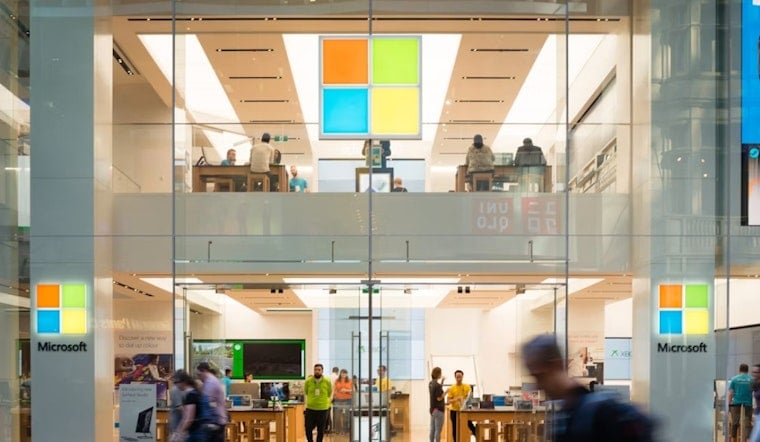
Today, Microsoft pulled the wraps off a new subsidiary, Microsoft Frontier Company, a $2.5 billion bet aimed at helping big corporations choose and roll out artificial intelligence tools. Early marquee customers include Unilever and Novo Nordisk, signaling that Microsoft wants this unit sitting at the same table as the world’s biggest operators, including in the Bay Area.
Frontier is set up to work shoulder to shoulder with customers, helping them pick and stitch together AI technologies from both Microsoft and outside vendors, tailored to each company’s internal data and needs. Crucially, clients keep the fruits of that work instead of sending results back into Microsoft’s own systems, according to Reuters, via Investing.com.
Judson Althoff, who runs Microsoft’s commercial business, said the idea for Frontier came out of the company’s own trial and error as rival AI models surged. "Three years ago, when we built Copilot, we made a mistake by binding it to OpenAI models only," Althoff told Reuters, via Investing.com, arguing that customers now demand the ability to swap models in and out if they want to stay competitive.
How the Move Fits a Wider Deployment Scramble
Microsoft’s new outfit lands in the middle of a broader industry push to formalize "forward deployed" engineering teams, with experts embedded directly inside customer operations to get AI systems into production faster. Amazon Web Services has announced a $1 billion commitment to its own Forward Deployed Engineering organization, which places pods of engineers inside client environments to accelerate agentic AI projects, according to CIO Dive.
What Customers Are Asking For
Enterprise buyers are steadily shifting away from renting a single vendor’s model and are instead building multi-model stacks and sovereign AI setups that protect intellectual property and promise faster returns. Palantir has been pushing NVIDIA’s Nemotron open models into sovereign environments, while Microsoft has expanded Copilot and its Frontier previews so they can work with third-party models, including Anthropic, according to MarketScreener.
Local and Regulatory Implications
The policy squeeze on so-called frontier labs is hitting particularly close to home in the Bay Area. Recent federal action that forced Anthropic to cut off access to its most advanced models has left many large customers reevaluating AI governance, risk controls, and even the resilience of their model supply chains. Hoodline has been tracking how that drama is playing out in San Francisco; see Hoodline for local reporting.
Whether Microsoft can turn that $2.5 billion in seed capital into repeatable, high-margin implementation services will help determine which hyperscaler dominates the enterprise AI decade. Watch how the company prices Frontier’s services and whether customers bet on these vendor-backed deployment squads or continue to build their own teams. Microsoft’s talk of "Frontier Firms" offers a glimpse into the playbook, per Microsoft AI.





