

























































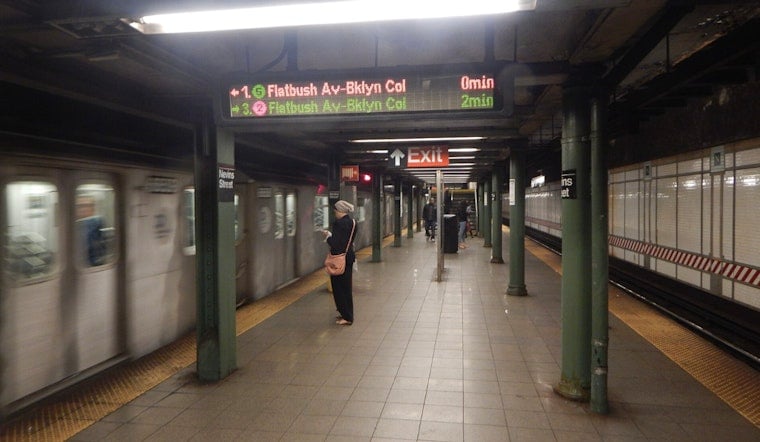
Brooklyn subway riders may finally get relief from delays caused by two notorious track snarls, as the MTA moves to rework junctions that can turn one train’s wait into a systemwide mess. The agency’s plan focuses on DeKalb Avenue and Nostrand Junction, where crowded routes repeatedly have to cross, merge and hold.
As reported by amNewYork, the MTA has identified two Brooklyn bottlenecks for near-term action while flagging 25 additional locations for possible improvements. Senior MTA planner Liam O’Connell said train merges at DeKalb and Nostrand can create cascading delays well beyond the junctions themselves.
DeKalb’s crowded merge keeps trains waiting
At DeKalb Avenue, B and D trains merge with the Q and N services near the Brooklyn side of the Manhattan Bridge, forcing trains to wait for crossing movements. The MTA’s capital plan already calls for modernizing signals on the Broadway line and addressing bottlenecks around the Manhattan Bridge.
The next major step is communications-based train control, or CBTC, for the B and D lines between DeKalb Avenue and 47th-50th Streets-Rockefeller Center. The MTA plans to award that contract by the end of this year, according to the agency’s latest plans, with the goal of allowing trains to run closer together and move more consistently through the congested area.
Nostrand Junction could get a route swap
Nostrand Junction is a different kind of subway knot: the 5 train crosses onto the same track used by the 2 and 3 trains for roughly 150 feet. Gothamist previously reported that the layout forces trains to pause while other services pass, creating delays across the 2, 3, 4 and 5 lines.
The MTA wants to install new switches and realign the routes so the 5 runs with the 4 along Eastern Parkway, while the 3 runs with the 2 toward Flatbush. The idea is less about making trains dramatically faster than keeping them from repeatedly blocking one another in the first place.
More riders could benefit beyond Brooklyn
The agency’s capital plan says the Nostrand Junction work could improve reliability for more than 285,000 weekday riders and save the average passenger more than a minute. The current report also points to a previous F and M route swap that cut running times by 4%, offering the MTA a small but relevant proof that untangling routes can produce measurable gains.
Still, this is infrastructure work, not a magic wand for the next rush-hour delay. Brooklyn riders will likely have to wait for design, contracting and construction before these century-old track arrangements stop behaving like a daily subway obstacle course.





