

























































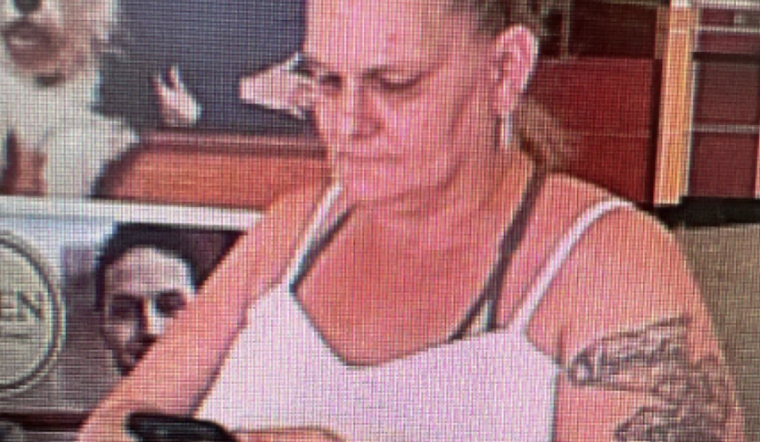
Queen Anne's County deputies have gone public with surveillance photos and a plea for help identifying a woman they say has been making the rounds at banks across Maryland's Eastern Shore, trying to cash stolen checks. Investigators report she was last seen Friday at the First National Bank branch in Stevensville, where she allegedly attempted to cash a stolen check for more than $9,000 without presenting any identification. Staff at the branch reportedly recognized her from at least one earlier attempt that same day, and anyone with information is asked to email Deputy Danielle Whited at [email protected] or call the sheriff's anonymous tip line at 410-758-6666.
According to WMAR2 News, the Queen Anne's County Sheriff's Office released the surveillance images on Tuesday and said bank employees recognized the woman from other similar incidents. The station reported that the attempted $9,000 cashing happened at the same First National Bank in Stevensville and that the suspect again provided no ID during the transaction.
Contact information listed on the Queen Anne's County Office of the Sheriff site confirms Deputy Danielle Whited as the lead contact on the case and lists the department's anonymous tip line as 410-758-6666. The sheriff's office is asking anyone, especially bank workers and regular customers, who thinks they recognize the woman to share surveillance stills or video so investigators can verify sightings and track her bank visits.
How the scam typically works
Investigators say schemes like this usually begin with stolen mail or stolen checks that are then altered using chemical solvents in a process known as "check washing." Criminals remove the original ink so they can rewrite the payee's name and the dollar amount, often turning a routine bill payment into a big-dollar score. The FBI and postal inspectors have warned that mail-theft-related check fraud has surged in recent years, with altered or counterfeit checks frequently deposited or cashed quickly before victims notice the missing funds. Officials advise holding on to any suspicious check and reporting it immediately to law enforcement and your bank.
What victims should do
If you think a check was stolen or altered, authorities say your first move should be to contact your bank right away, then file a police report. Suspected mail theft should be reported to the United States Postal Inspection Service, which offers both an online mail-theft reporting portal and a hotline. The Postal Service's Informed Delivery service can also help customers keep tabs on incoming mail so that missing checks stand out more quickly.
Financial institutions recommend some simple but boringly effective steps: use indelible black or gel ink, fill out every field on a check, and use security-enhanced check stock to make washing or counterfeiting tougher. The American Bankers Association provides additional prevention tips for both consumers and businesses.
Officials note this kind of fraud is not unique to Queen Anne's County. Similar cases have been reported in Ocean City and Worcester County, where suspects allegedly stole checks, washed them, and tried to cash them using fake identification. Police there also released surveillance photos while asking for the public's help in identifying the person involved, according to WMAR2 News.
Legal note
If this Eastern Shore investigation leads to an arrest, prosecutors could pursue a mix of state and federal charges related to mail theft and bank fraud. Federal statutes often used in these cases include 18 U.S.C. § 1708, which covers theft and possession of stolen mail, and the federal bank-fraud statute described by the U.S. Department of Justice. The exact charges would depend on what investigators ultimately find, including whether mail or postal workers were targeted and whether forged identification or counterfeit checks were used.





