

























































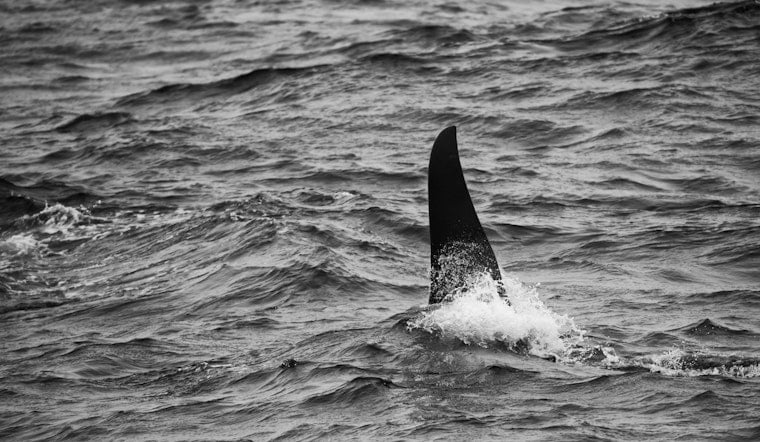
On June 26, a solo surfer off Neskowin got a jarring reminder that the Oregon coast belongs to more than just humans. A towering orca dorsal fin sliced through the water roughly 30 yards from his board, and he made the fast, sensible choice to paddle straight for shore. He later called the encounter “wild and raw,” and beachgoers who filmed the scene have since watched their footage ripple up and down the central coast.
As reported by The Oregonian/OregonLive, the surfer, identified as Lewis Childs, said the orca's dorsal fin was estimated at about 6 feet tall when it broke the surface about 30 yards from his board, which was more than enough to send him paddling hard for the sand. The Oregonian's story places the encounter just offshore from Neskowin on June 26 and includes Childs' first-person account of the moment.
A local video clip shared by onlookers shows what witnesses described as a large bull fin with a smaller animal nearby. Observers said the whales had been spotted earlier that day around Depoe Bay. People who filmed the scene and others who watched from shore told reporters they saw at least one calf and suspected there were likely more whales in the immediate area. Oregon Coast Beach Connection posted footage and eyewitness accounts from the scene.
Why orcas show up here in spring
Marine mammal experts say the visitors were likely transient, or Bigg's, killer whales. These groups specialize in hunting seals and other marine mammals and often move along the coast in spring to follow newborn pinnipeds. Transient orcas typically stay quieter while hunting and travel in smaller groups than fish-eating resident pods, which can make a lone dorsal fin seem to appear out of nowhere beside an unsuspecting surfer. SeaDoc Society details these behavioral differences.
How risky are these encounters?
Orcas are enormous animals. Adult males can weigh several thousand kilograms and their dorsal fins can reach roughly six feet tall, so any in-water encounter carries some risk simply from their size and unpredictability. Wild killer whales, however, are not known to have caused documented fatal attacks on free-swimming humans. Official species pages summarize typical adult sizes and behavior in this context. For additional perspective, both the U.S. Fish & Wildlife Service and comprehensive species accounts note that while captive orcas have injured trainers, fatal attacks on people in the wild have not been recorded.
What to do if you see an orca
If you spot whales while you are in the water, the advice is simple: give them space and do not block their path. If you are on a surfboard or paddlecraft, head straight for shore and resist any temptation to paddle closer or try to touch the animals. Regional guidance under the Be Whale Wise program sets specific approach distances and rules for boaters and paddlers. For Southern Resident killer whales, the required setback can be as large as 1,000 yards, while other killer whales are generally to be given at least 200 yards. Paddlers are advised to raft up and stop paddling if a whale comes toward them. The Washington Department of Fish & Wildlife maintains guidelines and reporting tools that apply across Pacific Northwest waters and serve as a useful resource for visitors. WDFW
For now, the Neskowin sighting stands as another reminder that peak whale activity along the central Oregon shore can turn a routine session into an unforgettable story. For a full first-person account and additional local video of the June 26 encounter, see the reporting in The Oregonian/OregonLive.





