

























































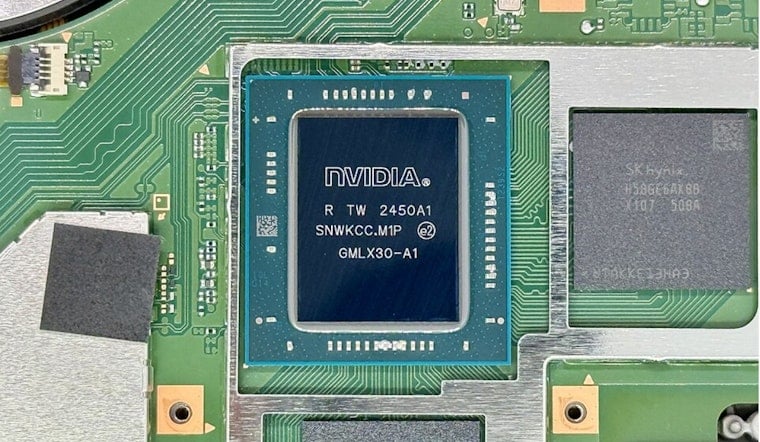
Fort Worth is getting a prime seat in the AI boom, and the action is centered on AllianceTexas. Taiwan-based Wistron is not building a chip fabrication plant, but it is turning two massive industrial buildings into hubs where Nvidia-powered AI supercomputers and server systems will be assembled. City and company documents tie the project to roughly $761 million in investment and hundreds of new jobs, positioning Fort Worth as a key manufacturing link in the U.S. AI supply chain.
What’s Actually Going On At AllianceTexas
The Fort Worth project is all about assembly and system-building. Wistron plans to renovate a 766,994-square-foot Westport building and a separate 324,598-square-foot site in the Alliance submarket, according to Hillwood. Together, the two facilities represent roughly a $761 million investment and more than 800 jobs, based on company and developer statements.
Nvidia describes the Fort Worth locations as part of a broader U.S. manufacturing push that relies on partners such as Wistron to assemble and digitally validate complete supercomputer systems for data centers, as outlined by NVIDIA. The idea is that the heavy lifting of putting these AI machines together happens close to major logistics and power infrastructure, not inside a chip fab.
Tax Breaks, Jobs And The Timeline
The Fort Worth City Council signed off on a 10-year tax abatement ordinance for the project in June 2025, creating reinvestment zones for both properties, according to City of Fort Worth records. The incentives are not small. Real estate reporting and city summaries show the abatement cuts projected new incremental property taxes sharply, trimming roughly $41.4 million in incremental taxes down to about $10.6 million over a decade. The agreement also locks in hiring and equipment commitments that are aimed at hundreds of full-time jobs, as reported by CoStar.
Public documents spell out investment and performance milestones that Wistron must hit in order to keep those incentives. Fall short, and the tax deal starts to look a lot less generous.
Why Fort Worth?
Developers and economic development officials keep coming back to the same selling points. AllianceTexas offers a mix of available power, freight rail and highway connections, and proximity to a major airport, which is catnip for high-intensity manufacturing and logistics operations, according to Hillwood.
Layer on top of that a suite of state and federal incentive programs and a spike in data center demand, and the logic becomes clearer. Companies are under pressure to locate manufacturing and assembly closer to cloud operators and big customers, a broader trend in Texas investment that has been tracked by The Texas Tribune.
Local Reaction And What To Watch
Local coverage has highlighted the familiar balancing act that comes with projects on this scale. A CBS News explainer and other reporting have pointed to the economic upside in jobs and new investment, while also raising neighborhood questions about water use, power demand and traffic. As CBS News and the Fort Worth Star-Telegram note, city hearings and public input sessions have already been part of the process leading up to approvals.
Residents and local officials will now be watching for the next set of details: when construction ramps up, how hiring is phased in, and what, if any, additional community benefits the companies put on the table.
Tax And Legal Notes
The ordinance that granted the abatements designates Tax Abatement Reinvestment Zones for the two properties and ties the incentive package to specific investment and hiring benchmarks. If Wistron misses those benchmarks, the city can pursue clawbacks, according to the official record. Those enforcement tools are standard for large incentive deals, and city officials say they plan to track compliance through annual reports and audits.
Bottom line: Fort Worth is carving out a role in the AI economy as an assembly and systems hub rather than a semiconductor fabrication center. The coming months should clarify when the AllianceTexas sites move into production, how many of the promised jobs ultimately go to local workers and how aggressively the city enforces the project’s commitments.




