

























































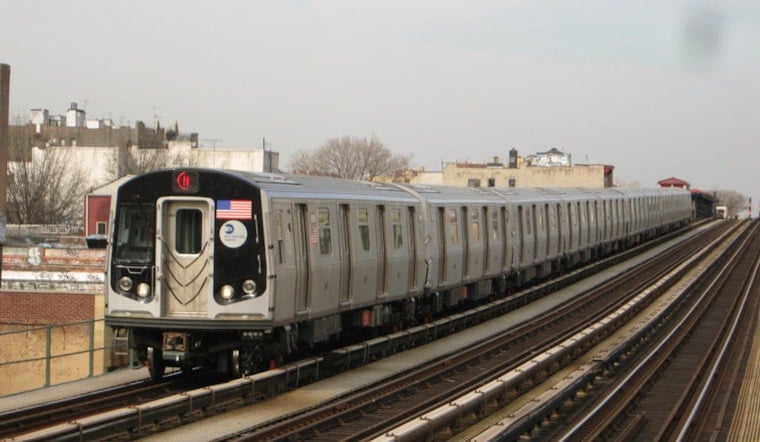
New York City’s subway, bus and commuter-rail system is staring down a widening financial hole: annual operating deficits are projected to swell to nearly $900 million by 2030. The warning landed at Wednesday’s MTA board meeting, where Chief Financial Officer Jai Patel outlined a future in which the system’s bills keep climbing faster than recurring revenue.
According to Bloomberg, the Metropolitan Transportation Authority is being squeezed by rising labor expenses, higher health-insurance costs for current and former workers, and increased spending on paratransit, the service that carries New Yorkers with disabilities. The projection covers the broader MTA network, including subways, buses, Long Island Rail Road and Metro-North.
The MTA’s Red Ink Is Getting Deeper
The previous July financial plan showed the MTA balanced through 2026 but running deficits of $345 million in 2027, $354 million in 2028 and $428 million in 2029. That plan also said paratransit costs were rising as ridership increased, while inflation was pushing up materials, maintenance and professional-services expenses, according to the MTA’s financial plan.
Riders have already been paying more: The base subway, local-bus and Access-A-Ride fare rose to $3 in January. MTA fare materials also contemplated additional fare and toll actions in 2027 and 2029, making the farebox one of the most obvious pressure valves even as affordability remains a political minefield.
New York’s latest state budget gives the authority substantial support, including $8 billion in operating aid and $3 billion for its capital program, while also requiring the MTA to find $3 billion in efficiencies, according to New York State budget officials. Those dollars help, but they do not erase the longer-term mismatch between recurring revenue and operating costs.
Congestion pricing is not a magic operating-budget eraser. The MTA’s financial plan says toll proceeds are deposited into a capital lockbox to support up to $15 billion in borrowing for long-term projects and do not affect the operating plan’s bottom line, while the New York State Comptroller’s Office says the authority still expects to issue $18 billion more in debt backed by its operating budget.
Riders May Hear Familiar Budget Arguments Again
The financial fight is already underway. Hoodline’s earlier budget coverage detailed City Council questioning over how the MTA could maintain reliable service while delivering promised accessibility and capital upgrades.
The Wednesday warning did not announce an immediate service cut, layoff plan or new fare increase. It does, however, leave Albany, City Hall and the MTA with the same uncomfortable menu of choices: raise revenue, find deeper efficiencies, increase public support or accept that future operating gaps could eventually put pressure on service and modernization work.
For New Yorkers, the nearly $900 million figure is still a projection rather than a bill coming due tomorrow. But it turns the MTA’s fiscal problem into a countdown, with the system expected to keep replacing aging equipment, improving accessibility and running daily service while its annual operating hole grows toward 2030.





