

























































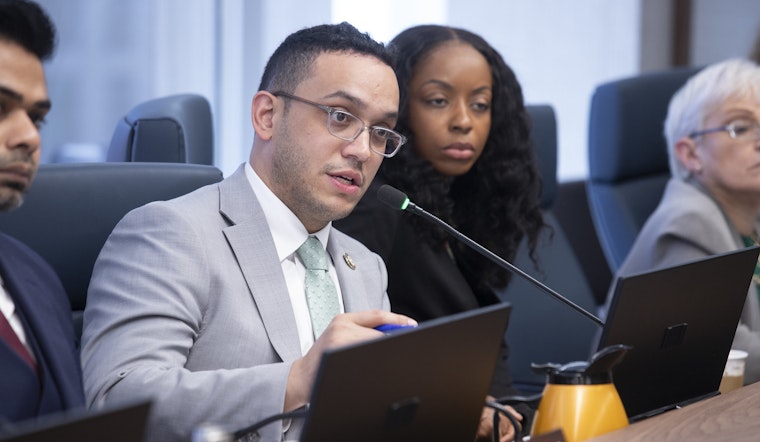
The New York City Council's Committee on Transportation and Infrastructure turned up the heat Tuesday, hauling in the MTA, the city Department of Transportation, the Taxi and Limousine Commission and the Department of Design and Construction for a sprawling preliminary budget hearing. Council members pressed agency heads on everything from delayed capital projects to day-to-day service reliability, and how Mayor Zohran Mamdani's preliminary spending plan could reshape transit and street investments next year. The sessions marked the start of the Council's formal review of the mayor’s fiscal 2027 preliminary budget and its accompanying capital plan.
Today, the Committee on Transportation and Infrastructure held its preliminary budget hearing to review the proposed budgets for the @MTA and New York City Transit, @NYC_DOT, @NYCTaxi, and Department of Design and Construction. pic.twitter.com/37P1meqOiU
— New York City Council (@nyccouncil) March 17, 2026
What the committee reviewed
The day was tightly scripted. The committee agenda scheduled MTA/NYC Transit at 9:30 a.m., DOT at noon, the Taxi and Limousine Commission at 2 p.m., and the Department of Design and Construction at 3 p.m., according to the agenda posted on Legistar. MotionCount's calendar carried the same lineup and indicated that the hearings were part of the Council’s preliminary budget and capital plan review, underscoring that this was not just routine oversight but the opening round of this year’s budget fight.
MTA's finances shaped the questioning
Much of the political energy in the room gravitated toward the MTA's balance sheet. Lawmakers zeroed in on the authority’s operating gaps and capital commitments, pushing officials on how they intend to keep trains and buses running reliably while still delivering long-promised upgrades. The MTA’s 2026 preliminary budget, described in its July financial plan, shows baseline shortfalls in later years and lists a set of below-the-line options that include a possible fare and toll increase in March 2027, according to the MTA 2026 Preliminary Budget. That backdrop framed pointed questions about subway reliability, elevator installation and station accessibility timelines, and whether City Hall could be tapped for more cash.
Budget politics and what comes next
The hearings unfolded as Council leadership has been sounding alarms about the broader city fiscal picture and warning against an easy raid on the Rainy Day Fund. In a March statement, Speaker Julie Menin and Finance Chair Linda Lee argued for alternatives to drawing down reserves. According to the NYC Council press release, the Council has identified savings and revenue options that it says could protect key services without depleting the fund. Testimony from this week’s transportation hearings will flow into the Council’s upcoming budget markup, where members will decide what amendments to push to the mayor’s plan.
What riders should watch
For everyday riders, a few pressure points bear close watching: fares, station accessibility dollars and bus reliability initiatives. The MTA’s financial plan explicitly lists a potential March 2027 fare and toll action as one tool to help close its projected gaps, according to the MTA 2026 Preliminary Budget. Public testimony and agency responses from Tuesday’s hearing will now be folded into internal Council debates over whether to restore or reshuffle money for street safety projects and transit upgrades. In other words, whatever was said in that committee room will help shape what riders eventually feel in their commute and in their wallets.




