

























































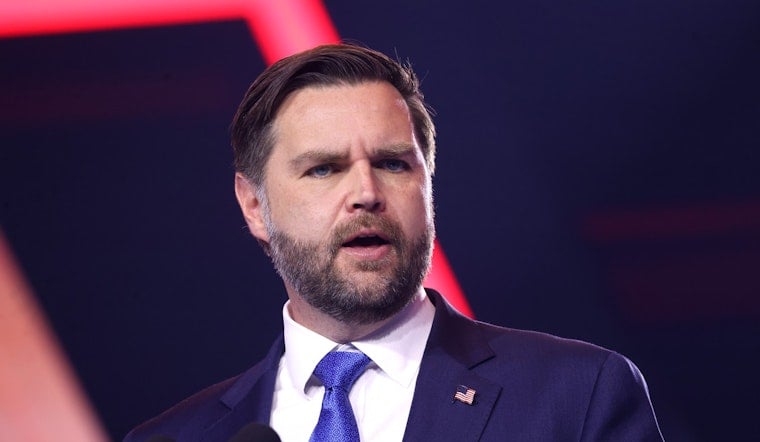
Barack Obama is taking square aim at Vice President J.D. Vance, blasting his recent rhetoric as a "blood-and-soil" spin on "We the People" that puts ancestry ahead of civic commitment. In a newly released conversation with Malcolm Gladwell, Obama argued that Vance’s framing reflects a wider push inside the Republican Party to shrink the circle of who counts as truly American. He also suggested that public contradictions and hypocrisy, uncomfortable as they are, can sometimes be a backdoor to progress when they force hard questions into the open. The comments appear in Gladwell’s new Reconstruction project, which mixes podcast episodes with video conversations and interviews.
Obama’s remarks on Gladwell’s conversation
In the interview Gladwell posted to YouTube on July 16, Obama zeroed in on a July 2025 speech by Vice President Vance and said the modern GOP has rallied around a vision that “suggests only certain people truly belong,” according to OregonLive. Obama warned that talk which elevates bloodlines over shared ideas eats away at the civic foundation of American democracy. The back-and-forth has dragged Vance’s earlier remarks back under the spotlight and stirred up a fresh round of argument over who gets to claim the national “we.”
What Vance actually said
Vance’s comments came in a July 2025 address at the Claremont Institute, where he dismissed the notion that America is “just an idea” and instead pushed a heritage-centered notion of belonging. In an annotated transcript, he is quoted saying that Americans whose ancestors fought in the Civil War have “a hell of a lot more claim over America” than people who “say they don’t belong.” The Editors published the full text of Vance’s remarks. That particular line, and the policy direction it hints at, is what Obama and others homed in on during the Gladwell conversation.
Gladwell pushed back; Obama on hypocrisy
Gladwell pressed on what he cast as a clash between Vance’s hard-edged rhetoric and his own family circumstances, arguing that the gap was a vivid example of political contradiction. Obama replied that “hypocrisy is progress,” since it can corner people into confronting the distance between what they say and what they actually live, according to reporting by The Daily Beast. The exchange is part of a larger multimedia series from Higher Ground and Pushkin that is available on Audible and on video platforms. Together, the clips highlight how questions about identity and consistency are increasingly tangled up with live legal and policy fights.
Why the phrase matters
The phrase “blood and soil” is loaded. The United States Holocaust Memorial Museum notes that the slogan (Blut und Boden) sat at the heart of Nazi ideology and fused racial identity to land and territory. The USHMM also points out that the term has been revived by white-supremacist groups, which is why Obama’s use of it was meant less as a flourish and more as an alarm bell. For many observers, that history raises the stakes on how elected officials talk about who belongs in the country.
Policy backdrop
The dustup is not just about language. Reporting notes that Vance pushed an executive order that would have tightened the rules on automatic citizenship for some children born in the United States, a move the Supreme Court rejected in a 6–3 ruling last month. The Daily Beast has detailed how that policy fight lines up with Vance’s “heritage” rhetoric. That convergence is part of what turned Obama’s on-air critique from an academic debate into a live question of how citizenship itself is defined.
Bottom line
By weighing in on Gladwell’s platform, Obama pushed Vance’s Claremont speech back into the national conversation and spelled out what he sees as the stakes of drawing boundaries around who counts as American. Gladwell and other commentators in the series described parts of Vance’s argument as nativist, according to OregonLive. The resulting debate shows how questions of identity, historical memory and constitutional law are colliding as the country heads toward high-stakes policy battles over citizenship and belonging.





.jpg)