

























































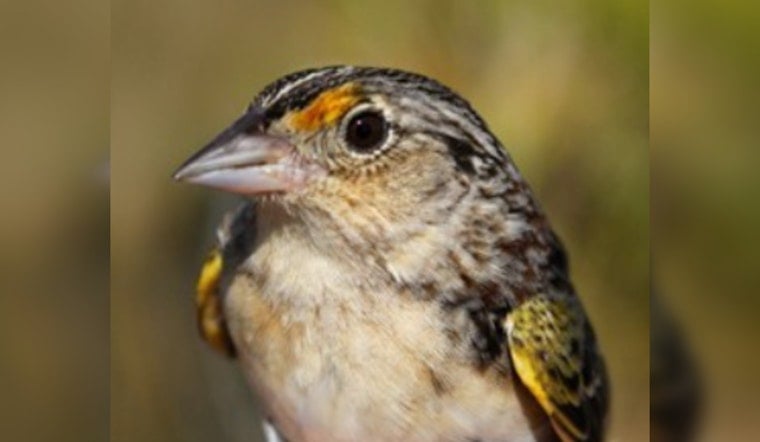
A tiny, buzzy bird that sounds more like a grasshopper than a songbird shuffled out of a temporary holding pen on a working cattle ranch earlier this month, giving one of North America’s rarest birds a badly needed second wind. Biologists say the release is one piece of a long-running recovery effort that mixes captive rearing with meticulous habitat work on both private and public prairies.
According to the Tampa Bay Times, researchers moved captive-reared Florida grasshopper sparrows onto the DeLuca Preserve in mid-July, where photographer Jefferee Woo captured one bird stepping out of a temporary “bird condo” before diving back into native grass. The quiet little moment underscored how hands-on the work remains, even after years of captive breeding and habitat protection.
Why the DeLuca Preserve matters
The DeLuca Preserve is a 27,000-acre gift to the University of Florida and includes thousands of acres of dry prairie and managed pastures that scientists consider prime sparrow habitat. University researchers and land managers have been using rotational grazing, targeted mowing and fire to recreate the open, low-growing prairie these birds need, according to UF/IFAS research on the site.
A species still fragile but stabilizing
The Florida grasshopper sparrow is federally listed as endangered and lives only in south-central Florida, which makes every remaining prairie parcel critical to the species’ recovery, per the U.S. Fish and Wildlife Service. State surveys and research in recent years documented steep population drops that triggered an emergency captive-breeding push, and the Florida Fish and Wildlife Conservation Commission continues to coordinate monitoring and surveys across release sites.
What captive breeding has done
Conservation partners marked a major milestone in 2024 when the 1,000th captive-bred Florida grasshopper sparrow was released as part of the multi-partner recovery program, a sign that rearing capacity and release techniques have grown significantly since the program began in 2015. Partners say captive releases, combined with on-the-ground management, have helped stabilize and even bump up local populations at some release locations.
How working ranchland helps
Ranch practices, when tailored for wildlife, can mimic the fire-maintained, open structure the sparrows prefer, and managers at DeLuca are blending cattle grazing with prescribed burns and invasive-plant control to keep prairie short and insect-rich, Archbold Biological Station researchers note. Local partners also step in when nests fail: field crews sometimes move vulnerable nestlings into holding or foster programs at partner zoos so the birds can survive to fledging.
“The recovery and release program diverted the extinction of the Florida grasshopper sparrow,” Adrienne Fitzwilliam, lead sparrow research scientist with the Florida Fish and Wildlife Conservation Commission, said of the broader effort. Bulletins from the Florida Fish and Wildlife Conservation Commission have repeated that assessment while warning that the birds remain vulnerable to fire-ant predation, drought and habitat loss.
Next steps for researchers
Research teams will keep radio-tracking birds, protecting nests and experimenting with release timing and age to boost survival and site fidelity. Recent studies suggest that the age and condition of birds at release can influence whether they stay put and breed in recipient prairies. Ongoing research and adaptive management at places like DeLuca will help determine whether captive releases can shift from emergency triage to a long-term, sustainable recovery path.
For central Florida, the work on this cattle ranch is a reminder that conservation can look as much like cattle drives and burn plans as it does like lab work and captive rearing, and that working landscapes can be part of the solution when they are managed with wildlife in mind.





